

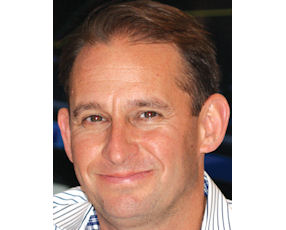
Much of Engaged Capital LLC’s work gets done behind the scenes.
That’s the typical—and preferred—approach taken by the Newport Beach-based activist investor, which specializes in locating what it views as undervalued public companies and advising them as a shareholder, with the objective of boosting shares over a period of two to four years.
It aims to do that “without public attention to our efforts,” said Chief Investment Officer Glenn Welling, who founded Engaged Capital in October 2012 with $85 million in seed capital from Grosvenor Capital Management, a Chicago-based alternative investor that manages about $40 billion in assets.
Engaged Capital has “a few hundred million dollars” in assets under management, Welling said, and typically buys between 1% and 9.9% of a target company’s stock. It focuses on the “small- to mid-cap” businesses, which it defines as having between $500 million and $3 billion in market value.
Behind-the-scenes conversations don’t always work, though.
“This is often the case when management and the board have perverse incentives in place, [which] result in them making decisions that are not in the best interest of the shareholders, but are in the best interest of management,” Welling said. “When this happens, one lever we will use to effect change is public pressure.”
Engaged Capital recently made a public move when it released a letter it wrote to the board of its portfolio company Abercrombie & Fitch Co., urging directors to replace long-serving Chief Executive Michael Jeffries.
The retailer’s board stopped short of firing Jeffries, giving him a one-year contract for $1.5 million in salary with bonuses tied more tightly to performance. The company also announced it will bolster its management team by hiring divisional bosses, including one “who supposedly” is a successor-in-waiting for Jeffries, according to Welling.
Engaged Capital, which owns about 400,000 shares, or 0.5%, of the New Albany, Ohio-based fashion retailer’s stock, had been working relatively quietly with the company and its chief financial officer for more than a year, primarily to evaluate and cut costs at the company, which includes more than 1,000 stores under the Ambercrombie & Fitch and Hollister Co. brands, as well as the smaller Gilly Hicks brand.
Trimming
There’s been progress on that front, Welling said, as the company has cut $130 million in costs, which will be reflected in its 2014 financials.
Another trim on the horizon: the closure of the eight-store Gilly Hicks nameplate, a move that Welling said had been suggested by Engaged Capital.
Abercrombie & Fitch’s sales have been falling consistently, ending the most recent nine-month stretch through Nov. 2 with $2.8 billion in net sales, down from $3 billion a year ago. The company lost $11.5 million over the nine months, versus a profit of $79.8 million a year earlier.
Abercrombie & Fitch recently had a market value of about $2.5 billion at a share price around $33. That’s a slight dip from December, when news of Engaged Capital’s letter to the board pushed its market value to $2.75 billion.
“We’re still working through the next steps with regard to Abercrombie & Fitch,” Welling said. “We think there’s great opportunities because of the quality of the brands. What’s required is bringing in somebody who can effectively reposition the products and stores such that customers don’t just want to come in to the stores but [want to] actually buy from the stores.”
20 Years
Welling has spent more than 20 years in consulting and investment management. He was a principal at San Diego-based activist fund Relational Investors LLC prior to starting Engaged Capital. Relational has about $6 billion in assets under management and is among the top activist investment firms in the U.S.
He also spent several years at Credit Suisse, overseeing the strategic finance group of the firm’s investment banking department. Other executive roles include a stint at Holt Value Associates LP and heading Valuad U.S., a financial software and consulting business he launched.
Engaged Capital currently operates on a team of eight individuals, with six in the investment group and a handful who came from Relational to join Welling.
The firm’s investors are mostly institutional and include family offices, endowments and pension funds.
A key part of Engaged Capital’s operations is support from other large shareholders of its portfolio companies, Welling said, adding that such backing helps the firm “get our agenda accomplished, [since] we only buy positions of influence, not positions of control.”
Engaged Capital has grown its portfolio to 12 companies. The firm has taken complaints with management public in three companies, including AeroVironment Inc. The firm holds 5.1% of the Monrovia-based unmanned aircraft systems developer, which had a recent market value of about $638 million. AeroVironment’s stock price is about $28, up about 35% since last July, when Engaged Capital filed its 13 D, a document required by the Securities and Exchange Commission for any investor taking more than 5% in a company’s stock.
“We look for businesses that have great products. Customers like them, but for some reason, the investors don’t value the company the same way the customer does,” Welling said. “When we find that impediment that’s holding them back … and if we understand why, then we get engaged with the management team and the board to remove the impediment that’s holding back the valuations.”
Engaged Capital’s diagnosis on AeroVironment’s “mispriced” valuation included a lack of communication to investors.
“The good news is the level of transparency and disclosure has been increasing,” Welling said. “The company appointed two new board members, and we’re in continued dialogue with them about capital allocation.”
