

The healthcare industry here already has seen a pair of big deals this year, and buyouts could be the story for the rest of this year.
Earlier this month, Newport Beach healthcare real estate owner Nationwide Health Properties Inc. struck a deal to be bought for $7.4 billion by Chicago-based rival Ventas Inc.
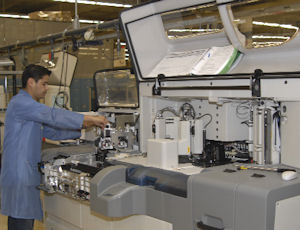
In February, Beckman Coulter Inc., a Brea maker of diagnostic testing equipment and supplies, agreed to a $6.8 billion buyout from Washington, D.C., conglomerate Danaher Corp.
“It’s definitely still more of a deal market than an IPO market,” said Paul Kacik, a managing director of healthcare investment banking at Costa Mesa-based McGladrey Capital Markets LLC (see related story, page 26).
Initial public offerings “are becoming fewer and far between,” he said.
The county has not seen a healthcare public offering since late 2007, when Ensign Group Inc., a Mission Viejo-based nursing home operator, raised $64 million in its offering.
Since then, some local healthcare companies have filed for public offerings, including Irvine dental management service provider Smile Brands Group Inc. in late 2009. Smile pulled back citing market conditions, while other offering hopefuls ended up being bought.
For a medical device or drug maker to go public, they need advanced products and revenue and profits to support the cost of being public, according to Kacik.
Being bought by a larger healthcare company is another story. Big buyers can pick up companies before they’re big enough to go public, or acquire smaller, publicly traded companies.
Recent small and midsize healthcare deals include the October sale of Aliso Viejo-based medical testing company Clarient Inc. for $598 million to GE Healthcare, and June’s sale of Rancho Santa Margarita-based device maker Gish Biomedical Inc. to Italy’s Sorin Group for undisclosed terms.
“Compelled to Shop”
Larger healthcare companies “have growth expectations that they cannot meet organically,” said Tim McQuay, a managing director with Los Angeles-based investment bank B. Riley & Co., which has a Newport Beach office. “They’re almost compelled to look for strategic additions.”
The Nationwide and Beckman deals, which are expected to close later this year, had their own rationales, according to McQuay.
“Nationwide is actually being driven by demographics and the need for housing and care for the elderly,” he said. “Obviously the demographic trend is that the percentage of the population to whom those companies will appeal to is growing.”
With Beckman, McQuay called Danaher a “very confident acquisition company” that identified a target “they thought they could do more with than was being done.”
Beckman spent much of past year wrestling with regulatory issues stemming from a recall of a profitable heart disease detection test.
Backlash from the recall caused the company to revise its earnings expectations and also led to the departure of former chief executive Scott Garrett before Beckman put itself up for sale.
“Danaher is just very good at acquiring and extracting value from businesses,” McQuay said.
Danaher, best known as the maker of Craftsman tools sold at Sears stores, is a familiar buyer here after its $2 billion acquisition of Orange-based dental products maker Sybron Dental Specialties Inc. in 2006.
Deals are expected to continue, according to McQuay, with low interest rates on debt and more availability of credit.
“Lenders are starting to open up more,” Kacik said. “I wouldn’t say it’s as free-flowing as it was back in 2007. But for good quality healthcare companies, the money is out there.”
In healthcare services, Kacik said he’s seeing interest in companies by strategic and private equity buyers.
“Private equity guys have a lot of dry powder that they want to put to work,” Kacik said. “And because the lending markets have opened up, that’s enabling (buyers) to put leverage on the healthcare services deals.”
He pointed to the sale late last year of San Clemente-based Kelcourt Plastics Inc., which makes plastic parts used in medical devices, to PPC Industries, a private equity backed company in Wisconsin.
Electronic medical records companies that are positioned to “(take) advantage of the stimulus money that’s flowing through the healthcare system” also are attractive to private equity buyers, according to Kacik.
Hospitals on Sideline
Not all parts of the healthcare industry are expected to see deals.
In Southern California, “hospital deals are fewer and far between,” Kacik said.
Large hospital operators tend to be disinterested in California for several reasons, including nurse staff shortages and costs related to meeting the state’s earthquake law, he said.
Nationally, analysts at Chicago’s Morningstar LLC recently forecast continued deals in the healthcare sector—particularly targeting emerging markets and niche drugs.
Morningstar picked several drug makers as potential deal targets, including Dendreon Corp., a Seattle cancer drug developer that’s setting up manufacturing in Seal Beach for its Provenge prostate cancer treatment.
