

Orange County bankers can take comfort in knowing they’re not alone.
Banks based in Los Angeles, many with operations in OC, are coming off bad loans and heavy losses with a series of strong earnings reports.
Eighteen banks based in Los Angeles County that reported results in late October recorded a combined $119 million profit, compared with a net loss of $122 million a year earlier.
Even more impressive: Profits are up 112% from the second quarter when the L.A. banks earned $56.4 million, according to an analysis for the Los Angeles Business Journal by Charlottesville, Va.-based SNL Financial LLC.
Six publicly traded banks followed by analysts also beat Wall Street estimates by healthy margins.
Although lending remains sluggish and may impede future revenue growth, there is a sense that local banks have identified and accounted for most of the problems in their loan portfolios.
The money set aside by the 18 banks to cover expected credit losses—called the loan loss provision—declined by more than half from the second quarter to $139 million, according to SNL.
“We’re seeing a general stabilization in credit quality, which is the driving force for improved earnings,” said Wade Francis, president of Long Beach-based bank consulting firm Unicon Financial Services Inc. “You’re seeing that the bad loans have been recognized in most banks already. It’s a matter of time before they just naturally go away.”
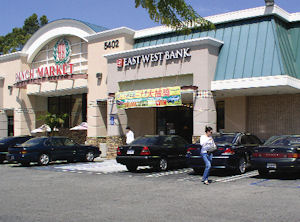
Among the banks beating expectations were Los Angeles-based City National Corp. and Pasadena’s East West Bancorp Inc., the two largest banks based in L.A. county.
A number of small community banks also saw revenue surge, such as Covina’s Stellar Business Bank, which swung to a $64,000 profit in the third quarter.
TARP
Future quarters may not stand out as much as the third quarter.
That’s because 17 local banks remain in the Troubled Asset Relief Program, which requires participants to pay a quarterly dividend to the government. Those payments are likely to continue to weigh down earnings. The banks, which have said they are finding it difficult to leave TARP, pay an estimated $12 million each quarter in dividends.
What’s more, revenue has remained stagnant and may not increase much because community banks have drastically cut back on new loans, their primary revenue source. In this economy, there just aren’t many good loan customers, according to bankers.
“Some people could question the quality of this rebound in earnings,” said Joseph Gladue, a community bank analyst for West L.A.’s B. Riley & Co. who follows City National and other local banks. “You’d like to see earnings come from growing revenues, not from decreased charge-offs and loan balances not growing. Reducing your loan loss provision from one quarter to the next is not a sustainable strategy.”
One example is Nara Bancorp Inc., the Koreatown parent of Nara Bank. Loan growth has taken a back seat to improving credit quality.
Alvin Kang, the bank’s chief executive, noted that Nara increased its loan portfolio moderately in the third quarter, but most of the bank’s efforts have been focused on addressing its portfolio.
“We’ve always been aggressively trying to identify, monitor and dispose of our problem assets,” Kang said. “We did a bulk sale of loans that closed in the third quarter that helped us to bring down our problem assets.”
The bank sold off $61.1 million in problem loans for more than expected, resulting in a $3.7 million pretax gain. With credit quality improving, the bank set aside just $11 million for loan losses in the third quarter, down 74% from three months earlier, when it had a provision of $43 million.
Reducing credit costs helped Nara earn a $5.1 million profit in the recently ended quarter. Analysts had anticipated a loss of $463,000.
Profits
All but three of the 18 L.A. banks that reported in late October earned a profit in the third quarter, with combined net income well more than $100 million.
All of L.A.’s larger publicly traded banks beat expectations this past quarter.
City National, like many of the nation’s largest banks, owes its healthy earnings in part to regulations that forced it to release money from its loan loss reserves.
Regulators require banks to draw down their loan loss reserve when it is determined, based on credit reviews, that the money won’t be needed to cover future losses.
After more than a year spent aggressively padding reserves, many of the largest financial institutions, including JPMorgan Chase & Co., were required to release money from loan loss reserves this past quarter and put the money toward income.
With credit quality improving in the third quarter for many local banks, several reduced their allowance, which inflated earnings. City National, for one, drew down its reserves by $16 million as nonperforming assets fell more than 5%.
“In the depths of this recession, the regulators required banks to set aside massive amounts for reserves for losses,” Francis said. “Historically, banks that survive the downturn wind up taking a lot of that money back out of the reserves because it is not needed and they put it back into net income.”
For a true recovery, banks need to increase their lending, which will drive revenue growth in the long run, analysts said. The banks also eventually will need to repay the TARP money they owe the U.S. Treasury.
Bankers said they are generally willing to lend, but loan demand has subsided amid a decline in construction activity and new-business creation.
In a recent earnings conference call, Joanne Kim, chief executive of Koreatown’s Wilshire Bancorp Inc., noted that “loan demand remains relatively weak,” but the bank continues to look for opportunities to lend on specialized projects such as affordable housing developments.
Many local banks are well positioned to capitalize when loan demand returns. Low interest rates have allowed banks to pay little or no interest on their core deposits in checking and savings accounts. Those deposits, in turn, are used to fund loans at higher profit margins.
“Their cost of funds is extremely low,” Francis said. “What you’re seeing is that the banks are definitely benefiting from historic low rates.”
Still, Francis said, it could be two years or more before those funds are put to use as new loans. “It’s going to take a while.”
Clough is a staff writer with the Los Angeles Business Journal.
