
That compares with a 77% increase on last year’s list and a 34% increase in 2019.
The 15 lenders on this week’s list issued 174 loans, a 14% increase from last year. The average loan size was $1.18 million, up from $831,417 a year ago.
Lenders advance anywhere from $5,000 to as much as $30 million.
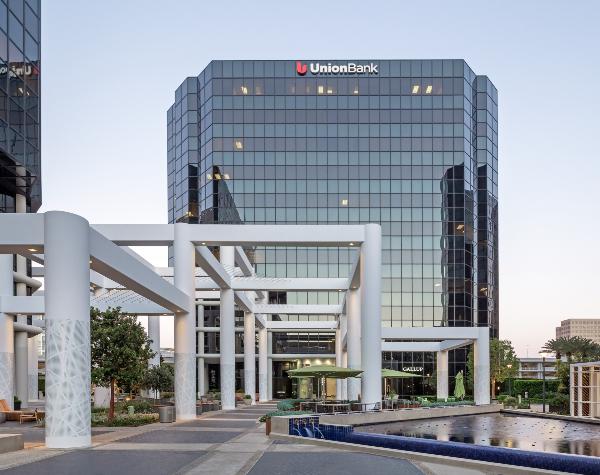
Union Bank claimed the top spot by reporting an 18% growth in loans to $24.1 million and doubling the number of loans to 16. A year ago, Union Bank almost doubled to $20.5 million in loans.
“Our growth is a reflection of good people and commitment from the bank,” said Todd Hollander, who is head of Small Business and Business Banking for Union Bank. “We’ve made a big investment in people.”
Nine of the 15 lenders on this year’s list are banks. Other lenders are community development institutions and nonprofits.
Data comes from the SBA and includes only lending to OC borrowers, regardless of the lender’s headquarters or branches.
The list measures two types of loans: the 7(a) program for business acquisitions, equipment purchases and debt refinance; and 504 loans used for owner-occupied commercial real estate purchases and refinancing, as well as equipment buying. The latter loan lets lenders ask for as little as 10% down, versus the typical 20% to 25% from their conventional banking products.
Ten lenders reported loan growth topping 15%. Not one lender on the list reported a decline. Six new companies made this year’s list.
The pandemic and the ensuing Paycheck Protection Program forced Union Bank to fast track technology upgrades, Hollander said.
“We processed 18 years’ worth of loans in six weeks,” Hollander said. “Small businesses are still struggling with the impact of the pandemic but we are seeing much more optimism with the roll out of the vaccine and the economy expected to increasingly recover through the summer months.”
Companies see the SBA loans as a steppingstone to the big leagues, as the government-backed leverage lets them grow a newer business.
Banks often look at SBA loans as an important entry into the front door of small companies in growth mode.
Jared Wolff, chief executive at Banc of California Inc. (NYSE: BANC), told investors on a January conference call that he’s considering SBA loans for real estate, as other types of SBA loans are riskier.
“People made loans that they shouldn’t have made because they’re supported by government guarantees and somehow they talk themselves into them,” Wolff said. “And then when the economy goes bad, you’re left with a big number of loans with an overall portfolio of small dollar balance, and it’s a really big pain to work it out because you’ve got to follow all the government rules.”
Notables
-
Irvine’s CDC Small Business Finance, a community development group, rose 1% to $23.5 million, falling from the top spot a year ago to second place. A year ago, it reported an 83% increase. -
No. 3 Business Finance Capital of Los Angeles also rose about 1% to $23.1 million. A year ago, it had a 155% jump. -
Live Oak Bank, based in Wilmington, N.C., had the biggest increase in nominal terms, issuing almost $17 million more loans to a total of $22.8 million. The bank, which tripled the number of loans to 15, climbed eight spots to No. 4. -
The most dramatic increase was a 1029% by Readycap Lending LLC, which is based in New York. It issued three loans totaling $7.3 million. -
Two new entrants made a splash in the SBA loans: -
United Pacific Bank, which is based in the City of Industry, went from no loans a year ago to 4 loans totaling $8.6 million, good for No. 9. -
Advantage Certified Development Corp. of Long Beach ranked at No. 14 by issuing four loans that totaled $6.5 million, compared with no loans in the prior year.