

Mobilitie LLC made its first major windfall by improving wireless coverage across the country, one cellphone tower at a time.
Now growth is coming one arena, stadium and casino at a time for the Newport Beach-based provider of wireless infrastructure.
The privately held company, taking advantage of people’s growing expectations to be plugged in at all times, has become a leader in the installation of distributed antenna systems, or DAS, permanent antenna systems that can be placed in a variety of indoor and outdoor venues to provide better cellphone and wireless connections for patrons.
Mobilitie is now believed to be the country’s largest supplier of DAS for stadiums and other sporting venues where tens of thousands of smartphone-wielding customers can be in close proximity—checking online highlights, posting videos or pictures to Facebook or other sites, or just making calls.
Locations
Among the dozens of locations featuring the company’s products are Tropicana Field, home of MLB’s Tampa Bay Rays; Time Warner Cable Arena, the home court of the NBA’s Charlotte Bobcats; Arrowhead Stadium, the home field of the NFL’s Kansas City Chiefs; and Nationwide Arena, used by the NHL’s Columbus Blue Jackets.
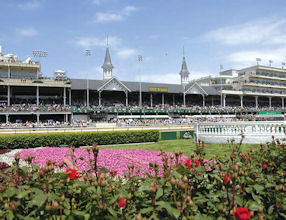
This month’s Kentucky Derby, with a crowd estimated at nearly 150,000, featured a Mobilitie-installed DAS said to have included more than 100 small antennas throughout Churchill Downs, linked together by more than 35,000 feet of fiber.
The company has also lined up other venues for its systems, including a recently inked deal for the Honda Center in Anaheim, as well as casino and hotel operators like Las Vegas-based MGM Resorts International.
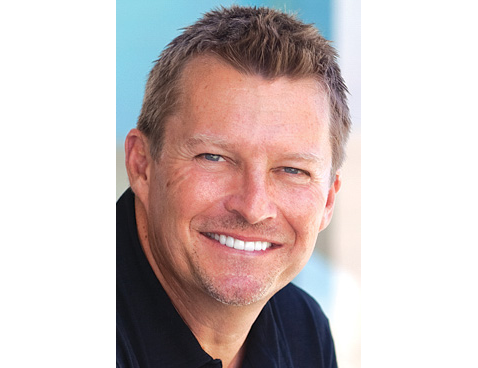
“It’s a big source of growth for us right now,” said Gary Jabara, a former partner in the telecommunications infrastructure practice of Deloitte who founded Mobilitie—pronounced “mobility”—in 2005.
The company spent its first years focusing on cellphone towers and built a national network of more than 3,000 that were in turn leased to most of the country’s leading cellphone carriers.
Last year it sold about 2,300 of the towers to Boca Raton, Fla.-based competitor SBA Communications Corp. in a deal valued at close to $1.1 billion.
The deal, in addition to providing money to help fund the development of its DAS line of business, freed up millions for Jabara, who last year took a run at buying baseball’s San Diego Padres franchise.
He’s also used the deal’s proceeds to buy nearly $200 million worth of real estate properties in Orange County, and he also helped fund the April launch of Newport Beach-based Villa Real Estate LLC, a high-end residential brokerage.
Jabara, who has described Mobilitie as a real estate company that happens to have a high-tech bent, thanks to its cell tower and DAS leasing strategy, is one of 11 new entries to this week’s OC 50, the Business Journal’s annual listing of the area’s most prominent businesspeople (see Special Report, page 29).
Capital Intensive
Not all of Mobilitie’s push into DAS is being funded by the windfall from last year’s SBA deal.
The company raised $100 million from Los Angeles-based private equity investor Shamrock Capital Advisors in February to help fund the building and deployment of its systems.
DAS projects for stadiums like Honda Center can run about $5 million for equipment and installation. Sometimes the company pays for the right to install the systems; other times the arenas foot all or part of the bill. And, in some cases, cellphone carriers pay part of the cost.
“They’re complicated systems and very capital-intensive,” said Mobilitie President Christos Karmis, another Deloitte veteran who has been with Mobilitie since its start.
Well Worth It
Carriers, who typically lease the neutral-host systems from Mobilitie, think the investment is well worth the costs, according to Jabara.
AT&T Inc., which worked with Mobilitie on the Churchill Downs installation, likely “made millions of dollars” over the course of the May 4 horse racing event, thanks to heavy customer data-usage fees, he said, adding that the systems, in addition to generating revenue, also help cellphone carriers retain customers.
Studies show that while wireless customers might accept the occasional dropped call while traveling in their cars, they’re much more likely switch carriers if they can’t connect at a concert or ballgame, he said.
The company also touts DAS’ benefit to arenas themselves. The systems are designed to allow broadcast of site-specific content to mobile devices, giving concert-goers with upper-level seats a front-row view on their phones, for example.
Mobilitie’s business model “enables wireless and wireline carriers to preserve precious capital while accelerating network development,” said Steve Royer, a partner at Shamrock.
Royer said his private equity firm has been “impressed” with Mobilitie’s track record.
Next Steps?
Mobilitie said it continues to generate strong revenues from leasing its remaining cellphone towers to carriers, but DAS is now the fastest-growing part of the company’s business, according to Karmis.
He said the company plans to announce a few more product lines this year to piggyback on the DAS success.
All of the growth has caught the eye of numerous potential suitors, according to Jabara, who estimated the company’s enterprise value—essentially its market cap plus debt and minus cash—at between $400 million and $500 million.
Private equity firms like New York-based KKR & Co. have inquired about a potential acquisition, as have other tech companies, including Mountain View-based Google Inc. and Facebook Inc. of Menlo Park, he said.
“It’s fun to talk to people,” Jabara said.
But he said the company has no immediate sales plans or plans to go public via an initial public offering, although he said its financials are IPO-ready.
“You like to have options,” he said, adding that technology companies like Mobilitie tend to get the highest price from a “strategic sale” to a well-funded company in its industry.
