

Technology buyers and sellers seem to be finding a happy medium in their valuations, prompting a growing number of deals this year.
“Interest in doing deals is very high,” said Karan Khanna, cofounder and president of MergerTech Advisors, a San Ramon-based investment bank that works with technology companies with less than $50 million in revenue. “I think both buyers and sellers have a lot of optimism that they will get a great valuation.”
Khanna, who lives in Newport Beach, has seen a “remarkable uptick in the number of transactions, even since January 1.”
He expects to work on some 25 deals this year, up from 15 in 2010.
Steady Climb
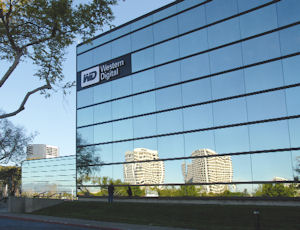
Tech valuations seem to be on a steady upward climb. Last week saw Irvine-based disk drive maker Western Digital Corp. agree to pay $4.3 billion for Northern California’s Hitachi Global Storage Technologies Ltd. in a big consolidation play that’s set to close in the third quarter (see related story, page 1).
The biggest deal in technology last year was Irvine-based chipmaker Microsemi Corp.’s buy of Northern California’s Actel Corp. for $585 million (see list, page 30).
The biggest tech buyout of a local company in 2010 was the sale of Irvine’s Teridian Semiconductor Corp., a maker of “smart” utility meter chips, to Sunnyvale’s Maxim Integrated Products Inc. for $315 million (see list, page 28).
Companies in the market to sell themselves this year are feeling more confident about getting a good price, according to Khanna.
That’s partly because buyers see the market as stocked with fairly good deals amid a gradual economic recovery, he said.
“Buyers are now expecting to pay good prices, and from the sellers’ perspective, there’s optimism in getting the deal done,” Khanna said.
Last year, buyers swooped in hoping to get “cheap deals done” amid a fire sale mentality, he said.
Deals stalled when sellers wouldn’t agree to a lowball price, according to Khanna.
The bargain-hunting made many sellers less likely to put themselves on the chopping block.
“It’s a time-consuming process and it takes a toll on emotions and on the business,” Khanna said. “You don’t want to start this process unless you are sure you will get it finished.”
This year, the steady climb in valuations and the increasing number of deals is “showing some stability” to the industry at large, said Maneesh Goyal, principal at Corona del Mar’s Miramar Venture Partners.
“We’ve seen that valuations for the non-consumer oriented deals have been pretty reasonable,” he said.
Hot Segments
A few hot segments in tech are outpacing the general market.
Miramar’s Goyal called them “micro-bubbles” that are focused on Internet-related technologies.
Chicago’s Groupon Inc., the group buying website that spurned a $6 billion offer from Google Inc., is going forward with plans for an initial public offering that could value the company at $15 billion or more.
That’s on the heels of the company raising nearly $1 billion in private funding.
Micro-blogging website Twitter recently was valued at nearly $8 billion and social networking giant Facebook was valued at about $50 billion by investment bank Goldman Sachs Group Inc.
These companies “are at the top of the stack,” Goyal said. “I personally think it’s an anomaly.”
The high-flyers are grabbing the lion’s share of attention in any case, sometimes at the expense of companies in less-glamorous segments of the tech industry.
That has some companies—which are not yet poised for an exit—having a tough time raising additional funding.
“The guys in the middle that perhaps had funding a few years ago are having a hard time getting that next stage of financing,” Goyal said. “A lot of our companies that are growing are not able to get those series Bs.”
Middle-of-the road companies sometimes sell out early under such conditions.
That was the case late last year for Laguna Niguel-based Symwave Inc., a maker of chips for the next generation of universal serial bus ports.
Symwave was ac-quired by one of its backers, Hauppauge, N.Y.-based Standard Microsystems Corp., for undisclosed terms.
The exit “fell short” of expectations for the company’s chief executive, former Broadcom Corp. executive Yossi Cohen.
A similar situation happened with another local hopeful, Irvine’s Aktino Inc.
The startup maker of telecommunications gear that had raised some $40 million in venture funding.
It was bought in 2009 by Canada’s Positron Inc. for undisclosed terms.
The recent upswing in valuations and continued interest from buyers appears to have brightened the picture for tech companies in similar spots this year.
