

Homegrown banks and savings and loans continue to build up cash and work through problem loans as they struggle for profitability.
That’s the overall assessment of analysts who crunched second-quarter data from community banks and thrifts here for the Business Journal.
On the whole, the picture remains mixed.
A handful of local banks and thrifts still are wrestling with bad loans. Some newer banks are striving to break even amid weak loan demand and tight credit standards.
Others are doing well after staying conservative during the lending boom.
In the second quarter, 15 local banks and thrifts upped a key metric for regulators, their ratio of capital to credit-risk assets, according to Charlottesville, Va.-based SNL Financial LLC.
“Companies have been building capital in general,” said Tyler Hall, an SNL analyst.
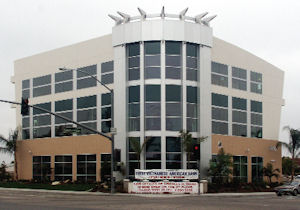
Banks and thrifts are considered well capitalized with a tier 1 risk-based ratio of 6% or higher. The only local bank or thrift to be below that benchmark in the second quarter was First Vietnamese American Bank in Westminster.
With a ratio of just more than 3%, the bank is considered undercapitalized.
Late last month, California’s Department of Financial Institutions approved the sale of First Vietnamese to Charles and Michael Lhuillier, brothers who run one of the largest pawn shop and jewelry operations in the Philippines.
The brothers head MLhuillier Inc., a group of financial services, retail and real estate businesses.
The Federal Deposit Insurance Corp. still needs to approve the acquisition, First Vietnamese Chief Executive Benjamin P. Palma-Gil wrote in an e-mail to the Business Journal from Asia last week.
He had no further comment on the deal or the bank’s status.
First Vietnamese opened with fanfare in 2005 as the first bank to specifically target Vietnamese-Americans and their businesses in Little Saigon, which spans Westminster, Fountain Valley, Huntington Beach, Garden Grove and Santa Ana. The area is home to an estimated 200,000 Vietnamese residents.
First Vietnamese, which lost $1.1 million in the second quarter and hasn’t posted a profit since it opened, was issued a cease and desist order in May from the FDIC to improve compliance and lending practices.
Profits, Losses
It was among 13 banks and thrifts in the county that lost money in the second quarter, with 14 posting a profit. Five banks reversed losses from a year earlier and three reversed gains.
Newport Beach-based California Republic Bank posted its first quarterly profit since opening its doors in 2007. The bank, which raised $52 million before getting regulatory approval, had a profit of $1.9 million, reversing a $2.1 million loss a year earlier.
It’s common for new banks to lose money in the first few years as expenses outpace revenue. Without a lot of loans and clients, banks can’t earn money through interest and fees.
“Our strategy is to be a very safe, well-capitalized bank,” California Republic Chief Executive Jon Wilcox said. “Because we’re so safe we’ve been able to attract good customers.”
The bank has $162 million in loans, up 44% from a year earlier. It has yet to see an underperforming loan or a late payment, according to Wilcox.
Tustin-based Sunwest Bank, which acquired three failed banks last year, posted the highest second-quarter profit at $4.8 million. Acquisitions helped the bank boost assets to $659 million, up $191 million from a year earlier.
Sunwest avoided speculative real estate and construction lending during the boom, which put it in a position to pick up some of the pieces of the wreckage.
“We saw it, we connected the pieces of information,” Sunwest Chief Executive Glenn Gray said. “It was a bubble, and it was easy to figure it out.”
The bank has written off a handful of loans this year, about $1.4 million worth, and is reworking others, Gray said.
Costa Mesa’s Pacific Mercantile Bank, the county’s largest homegrown bank with $1.1 billion in assets, lost $1.3 million in the quarter.
The bank, which is considered well capitalized with $88 million in equity capital, is working through some loan issues, according to an analysis for the Business Journal by Anaheim-based Findley Reports Inc.
Pacific Mercantile scored 66% on what’s known as a Texas ratio, a measurement of bank health that compares bad loans to how much shareholders would be owed if the bank failed.
The lower the score, the better, with a score higher than 100% indicating a bank could be teetering.
Analysts at Royal Bank of Canada’s RBC Capital Markets came up with the ratio in the 1980s while looking at banks in Texas.
Average Ratio
The majority of banks and thrifts in the county scored well on the Texas ratio in the second quarter. Only six scored at or above the 50% mark, where regulators start to take notice.
As a group the average was 27.5%.
Centennial Bank of Fountain Valley saw a second-quarter Texas ratio of 103%.
The bank was issued a cease and desist order from the FDIC in February to shore up its management team, improve its capital position and reduce risk exposure.
First Vietnamese had the highest Texas ratio at 317%. A year earlier it was 47%.
Westminster’s Saigon National Bank, another bank that opened in 2005 to serve Little Saigon, had a 61% second-quarter Texas ratio.
The bank lost $1.3 million in the second quarter.
Loc Huynh, senior vice president of Saigon National, said many of his clients, especially merchants, are struggling in the downturn.
“We work with our clients, instead of taking drastic measures with them,” Huynh said.
The bank is reducing costs and reviewing vendor contracts, he said. It has cut more than $20,000 in expenses, according to Huynh.
“It was a substantial cut,” he said.
The federal Office of the Comptroller of the Currency in May stuck a formal agreement with Saigon National Bank after it missed six Troubled Asset Relief Program dividend payments.
The bank took $1.5 million in federal money in 2008.
Saigon National was ordered to improve compliance, eliminate management deficiencies, boost capital ratios, conduct an internal audit, examine its commercial loan portfolio, and not increase loans.
