

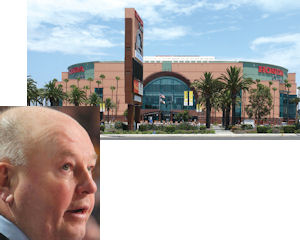
The Anaheim Ducks are anxious to make up with fans who have waited three months for the NHL season to start.
Now they need a schedule—which is expected be worked out this week, with a Jan. 19 opener setting the stage for a season of 48 games, a little more than half of a standard campaign.
Then will come the challenge of filling the Honda Center, which will likely host the team’s first home game of the season next week.
The Ducks plan to add some pocket-book incentives to their marketing, including vouchers for discounted food and merchandise. They’re also likely to repeat some popular promotions in the past, which include sales of multiple-game ticket packages at discounted prices.
An all-you-can-eat section, among other promotions, could carry over to the strike-shortened season, and new promotions will be mixed in as the season progresses, according to Aaron Teats, the team’s chief marketing officer.
A lot of the planning depends on the schedule, but Teats said the team will make a full press to reach fans once the lineup of games is set.
“Once we have the schedule we will hit it everywhere,” Teats said.
That means print, online ads, TV and radio advertising in addition to social media marketing.
Advertising and marketing is done in-house with the exception of marketing for premium seating. In November the Ducks hired El Segundo-based advertising agency Team One USA to market premium seating, which includes party suites and club seats.
The Ducks emphasize social media in their marketing, using Facebook, Twitter, Instagram, Pinterest and other accounts. The team has more than 200,000 “likes” on Facebook and 82,000 followers on Twitter.
The team promoted a contest through Facebook the day after the lockout ended, giving fans the opportunity to win an autographed puck and hat from head coach Bruce Boudreau. The Ducks asked fans to take a quiz about Boudreau based on a video series featured on their website.
The response to the end of the strike from Ducks fans on Facebook and Twitter was mostly positive, with many showing their excitement and support. Others said they’ll go to the games but won’t buy any merchandise, food or park at the Honda Center as a way to protest the effects of the lengthy labor dispute on fans.
The 30 teams in the NHL combined for a record $3.4 billion in revenue last season, with franchises valued at $282 million on average, according to Forbes. The Ducks—owned by Susan and Henry Samueli, founder and chairman of Irvine-based chipmaker Broadcom Corp.—were recently valued at $192 million by Forbes, which estimated that the team had $91 million in revenue last season, with operating income of about $11 million.
The NHL gets a higher percentage of revenue—47%, according to Forbes—from ticket sales, concession and parking than other major sports leagues.
It lags other leagues when it comes to revenue from television rights.
The NHL’s current deal with Philadelphia-based Comcast Corp., parent of NBC, is worth about $2 billion over 10 years.
Major League Baseball recently got $12.4 billion for its 30 teams with an eight-year deal with the Fox network and the ESPN and TBS cable channels.
The recent strike was the third that led to a shortened NHL season in the past 20 years.
That means the current bid to make good with fans is nothing new.
And a winning team will likely do more than any discounts.
“We know there are expectations, and we need to earn the trust of our fans,” the Ducks’ Teats said. “We intend to prove to them that we are who they think we are by putting a fantastic product on the ice all season.”
