

The persistent low-interest-rate environment has pushed more financial advisers and investors to explore asset classes other than the traditional stock and bond markets in search of yield-generating opportunities.
Local advisers are seeing a growing emphasis on the need for strategic and holistic approaches as the scope of available investment types continues to broaden.
Such “alternative” options range from real estate to commodities to golf courses, and they are typically seen as having greater risk than more traditional investments.
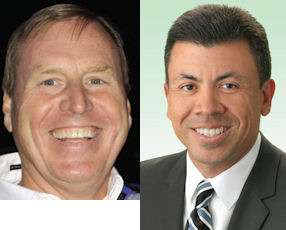
“There’s now more access to other investments than there have ever been before,” said Greg Mech, managing director of the Orange County unit of Boise, Idaho-based Caprock Group, a multifamily office that manages the finances of some 80 wealthy families.
“We don’t subscribe to the traditional asset allocation … and we’re unrestricted in terms of where we go to identify assets,” Mech said.
Caprock’s investment choices include relatively liquid assets—bonds and domestic equities—and various types of alternatives, including distressed assets, hedge funds and private equity.
Mech is a 30-year veteran of the industry was regional managing director for the western U.S. for Merrill Lynch & Co. He joined Caprock when the firm opened its Newport Beach office last month. Caprock also has offices in San Jose, Utah and Washington, and operates through outside asset managers.
Mech said another category Caprock considers an alternative investment is master limited partnerships.
“They’re often in the business of transporting oil and natural gas, so these actually have tax advantages and cash distribution,” he said. “They also exhibit a very low correlation with other asset classes.”
They Can Touch It
Mech also pointed to an increasing interest from clients in “real” assets, such as commodities or real estate.
“There’s a general sense of clients wanting to own real assets,” Mech said, referring to residual nervousness from the recession and concerns of inflation. “There is a large trend around this that’s not adviser-driven.”
Advisers at the OC office of Bank of the West said they’re seeing similar interests from clients, though there’s still a lingering desire to hold on to cash.
“We see an abnormally large percentage of portfolios still being held in cash, but when clients do deploy that cash, they’re really looking for commercial real estate,” said Ed Mora, senior vice president and market head for the wealth management team in OC.
“If they are going to make a move, they will want something tangible. I can’t speak for other markets, but here in OC, it’s generally going toward commercial, and not residential real estate.”
A rebound in the local commercial real estate market has helped drive the appetite, Mora said.
Others point to many business-owning investors having a comfort level with commercial assets, plus the fact that institutional and private equity investors have already picked up many residential properties.
“The lack of commercial projects over the last few years has left supply pretty low. What we’re seeing is more projects on the horizon. It’s definitely different from five years ago,” he said.
San Francisco-based Bank of the West, which has about $63 billion in assets, provides commercial banking and wealth management services, among others. It’s part of Paris-based financial services company BNP Paribas.
Bank of the West’s wealth management arm serves 19 markets in the U.S., the OC market being one of the largest, according to Mora.
The local team has grown from 10 to 17 employees in the past two years and is expecting construction on a new office in Newport Beach to be complete in March.
A long-term outlook plays a key part in Peter Nanula’s investing model.
Nanula runs Concert Golf Partners in Newport Beach, a private equity firm that owns and manages golf courses.
It’s an affiliate of Seattle-based Freestone Capital Management, which manages $2.7 billion in client assets.
Roughly a third of that is invested in “illiquid, alternative investments,” said Nanula, who serves as a managing director of the firm’s alternative investment group. “And Concert Golf is a part of that. It’s an investment of five to 10 years. It’s a hybrid of real estate and private equity.”
Concert Golf started investing early this year out of a $50 million fund that Nanula raised “strictly from wealthy families who like the yields that we can generate.”
Returns on Concert Golf’s investments typically fall between 15% and 20%, Nanula said.
Concert Golf recently acquired the Legacy Club at Alaqua Lakes, an 18-hole course in Orlando, Fla. Its buys typically are cash transactions that range from $4 million to $7 million.
Nanula, whose background is in law and private equity, isn’t new to managing golf-course portfolios. He was a principal at New York-based private equity firm Warburg Pincus LLC when he bought Addison, Texas-based Arnold Palmer Golf Management in 1993. He served as chief executive until 2000, when he said he thought prices had gotten too high, and sold the company. He started golf-club investing again in 2010, when he thought the timing was right again.
Staying Cautious
Not every adviser or investor is looking to invest for long periods in illiquid alternatives.
“This idea of locking up money—people are very reluctant to do that,” said Stewart Darrell, an investment officer at GenSpring Family Offices LLC in Costa Mesa. “Now we’re getting to the point where people are starting to feel they can lock up money for a year or two. They’re starting to loosen up, which makes me nervous.”
Darrell is part of the western U.S. unit of the Palm Beach, Fla.-based multifamily office, which manages about $15 billion in client assets. The West Coast team of 15, most in the OC office, manages the finances of nearly 30 high-net-worth families in the region.
“If investors are looking for something that’s liquid and high-yield, those don’t really exist,” Darrell said. “Yes, there are these alternatives out there, but it’s important to make sure investors understand the risks and are willing to commit the money. You’ve got to have a strong stomach.”
Darrell said his team has been cautiously decreasing holdings in high-yield bonds and alternative assets while increasing their weight on global stocks.
“It’s cautious times, so we’re not being super aggressive in any specific place,” he said.
Stocks and Bonds
Newport Beach-based equity manager Triad Investment Management LLC is sticking to the equities market, looking to strike a profitable balance as it positions its client assets to benefit from the dynamics between stocks and bonds. The firm has about 80% of its overall portfolios in stocks and the rest in fixed income, according to President John Heldman, who runs it with Managing Director David Hutchison.
Triad works mostly with high-net-worth individuals and has about $120 million in assets under management.
“People are starting to warm up to the idea of putting money back into the stock market,” Heldman said. “You see money going from bonds to stock.”
The U.S. stock market, measured by the Standard & Poor’s 500 index, has grown about 22% since the beginning of this year. The index is up by 140% compared with the most recent downturn’s low point in early 2009.
Increased optimism about the stock market isn’t “completely misplaced,” Heldman said.
But, he added, investors should take note of the market’s already elevated level of return before jumping in too deeply.
“You probably don’t want to put the money into the stock market if you don’t have a time frame of three to five years.”
The low level of returns by bondholders has contributed to the growth in the stock market. The Federal Reserve for the past five years has kept the interest rate near zero by buying bonds and pumping money into the economy. Anticipation that it might soon stop the program and increase interest rates has pushed investors out of the bond market in recent months, driving down bond prices.
Triad is taking advantage of the decrease in bond values, Heldman said, though he’s “not in a hurry” to allocate a big chunk to debt.
“This [potential] increase in interest rates is starting to make bonds more attractive than earlier this year,” he said, referring to the short-term borrowing rates. “We’re finding what we think are opportunities in the bond market—very selected opportunities.”
