

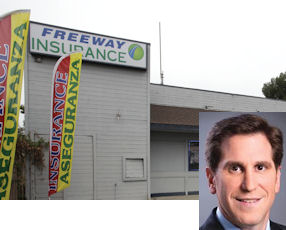
Buena Park-based insurance broker Confie Seguros Holding Co. is coming off a busy 2012 with plans to get busier this year.
The 5-year-old company, which focuses on the Latino-American market, reached $200 million in revenue last year. The growth came in large part on 22 deals for smaller brokerages, which more than doubled Confie’s geographic reach by adding operations in New York, New Jersey, Florida, Oregon and Nevada.
The Buena Park headquarters now oversees some 300 brokerages, many in storefronts under various brands, including Freeway Insurance in Southern California and Royale Insurance in New Jersey, among others.
The company started by specializing in auto insurance and now is aiming to add policies for home owners and small commercial businesses.
Confie’s plans for this year call for at least 30 more deals for brokerages around the country, with a bid to extend its presence into new geographic areas.
“Consolidation in the insurance-brokers arena is a proven strategy,” said Confie President Mordy Rothberg. “You have it in the middle-market commercial area, which is fragmented. The big ones like Aon or Marsh, they really grew through consolidation.”
Goal
The goal for privately held Confie—which doesn’t disclose profits—is to reach $500 million in revenue within five years. That would be an increase of about 150%, and Rothberg is counting on growth of the Latino-American population throughout the U.S. along the way.
“We’re just expanding our universe and continuing the focus on the Hispanic market,” Rothberg said. “It’s funny—pretty much every business is trying to figure out how to market to the Hispanic consumers. That’s the fastest-growing segment of the population, and the most underserved in terms of insurance products and financial services in general.”
Confie’s busy 2012 yielded two key ingredients for future growth, according to Rothberg.
“The two things you need are scale and resources,” he said.
The company achieved “scale” with its acquisitions in new geographic markets.
“Once you have a presence in the geography, it enables us to continue growth and fold in acquisitions,” Rothberg said. “Entering new territory is important for us. What we have today is what we didn’t have four, five years ago. We have credibility in the marketplace. We have references.”
New resources arrived with Abry Partners LLC, a Boston-based private equity firm that took a majority stake in Confie late last year.
Confie’s status as a private equity-backed firm has been a big plus since San Francisco-based Genstar Capital LLC put up $75 million to start the company. Confie soon acquired Westline Insurance in Cypress, which had about $50 million in annual revenue.
Genstar sold Confie to Abry last year, putting it in the hands of a firm familiar with the insurance industry. Abry has invested in more than 400 deals since its founding in 1989, and currently has other insurance-related businesses in its portfolio, including Parsippany, N.J.-based York Risk Services Group Inc., and Conshohocken, Pa.-based NSM Insurance Group.
“Abry believes in our management team, our strategy, our vision,” Rothberg said. “And more importantly, they have the resources to take Confie to the next level.”
The push has already started—Confie bought three insurance brokerages in Florida last month, bringing its number in the state to 13. Latinos make up 23% of the state, and Latino-owned businesses account for about 22% of the market there, according to information from the U.S. Census Bureau.
Demographics indicate that the growth of the Latino population in the U.S. is set to continue, and so is a trend of consolidation among brokerages backed by private equity, according to many in the industry.
“Historically, our industry has been viewed by the equity market as having an underdeveloped sales culture and an overstaffed support mechanism,” said David Kummer, president of SullivanCurtisMonroe Insurance Services LLC in Irvine. “I think we are viewed as one of the few remaining industries that have not fully transitioned and developed sales accountability. While many firms have made this transition, the majority of insurance is still delivered through smaller shops that have not been forced to make [such moves]. Equity markets see the opportunity to ‘correct’ these perceived weaknesses and opportunities to more quickly return equity on an investment.”
