

Allergan Inc. saw a smoother first quarter for Botox and sales of other medical cosmetic products, which took a hit during the recession.
Stronger sales of wrinkle-fighting Botox as well as skin fillers and breast implants helped the Irvine drug maker beat Wall Street estimates for the recently ended quarter.
Allergan posted a profit excluding special items of $200 million, up 18% from a year earlier and topping the $184.3 million expected on average by analysts.
“Overall, we saw a good (quarter) that confirms Allergan is still a good stock to own with exposure to a cosmetic recovery,” said Gary Nachman, an analyst with Leerink Swann LLC, a Boston-based investment bank.
Medical cosmetics, which Allergan refers to as aesthetic products, are estimated at about a third of company’s sales. Eye and skin drugs make up the rest.
The drug maker’s first-quarter profit jump was driven by an 11% rise to $1.1 billion in product sales, which are slightly less than total revenue and were in line with Wall Street expectations.
Allergan has been working to boost sales of three products that patients pay for out of their own pockets: Botox, lower-face wrinkle filler Juvéderm and Latisse for growing eyelashes. The company has used coupons and consumer advertising to stimulate business.
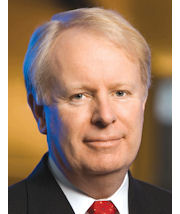
“When you look right through all the numbers, you can see a recovery in our aesthetic markets,” Chief Executive David Pyott said.
Juvéderm
Allergan’s medical device segment, including breast implants, Lap-Band for weight loss and lower-face wrinkle filler Juvéderm, rose 18% to $198 million.
Juvéderm sales are “just going through the roof,” Pyott said.
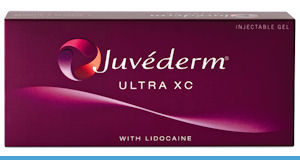
Pyott said he credited the launch of Juvéderm XC, a new version that includes anesthetic lidocaine, for the sales boost.
First-quarter Botox sales for treating wrinkles and some medical problems, part of its specialty pharmaceuticals segment, rose 11% to $331 million.
“Botox, once again, has been the most resilient product through the recession,”
Pyott said. “My interpretation is that people are now reducing, again, the intervals between treatments.”
The drug is facing its first full year of competition from rival Dysport by Scottsdale-based Medicis Pharmaceutical Corp.
In a research note, analyst Louise Chen of Collins Stewart LLC in New York said Dysport now has 13% to 14% market share for cosmetic botulinum toxins—the basis of Botox and Dysport. The market share estimate translates to about $40 million in annual sales.
Pyott is realistic about how Dysport will affect Botox.
“We have to accept on a worldwide basis and especially in the U.S. that we have to lose some share, as much as I’d love to keep 90%, that’s not going to happen,” Pyott said on Allergan’s conference call with investors and analysts.
The drug maker got a first-quarter bump from what it calls skin care products, made up of medical skin products and Latisse.
Sales from those products rose 32% to $50.6 million.
Some analysts expressed concerns about Latisse. The drug’s first-quarter sales came in at $18.8 million, up 53% from a year earlier but down from $26 million in the fourth quarter.
Allergan “believes the key factor (affecting) Latisse is that the early adopters are finding they can stretch out refills and it will take time to drive the next leg of volume growth from penetration of the mass market,” analyst Nachman said in a report.
Also, Pyott acknowledged seasonality may be at play when it comes to Latisse, as Botox and Juvéderm generally see their best sales in the fourth quarter.
“It’s sort of the ‘holiday photograph phenomenon,’” he said. “People want to look good for the holidays for whatever reasons.”
Besides the cosmetic side of the business, Allergan saw growth in its seminal market—eye drugs, with first-quarter sales rising 8% to $512 million.
Allergan got its start in the 1950s with eye drops.
In the first quarter, Allergan saw growth in dry eye drug Restasis, according to Pyott.
“It’s really gone mainstream,” he said.
Restasis rose 21% to $133 million.
Allergan, which is the county’s most valuable public company with a recent market value of about $18 billion, also boosted its 2010 profit guidance.
The drug maker said it now expects to have a profit of $955.1 million to $967.4 million, up from prior forecasts of $948.9 million to $967.4 million, driven largely by medical cosmetics.
“There are not many areas we would rather address than the aging, fattening U.S. population,” said Sean Lavin of Lazard Capital Markets in a research note.
Allergan left its prior $4.55 billion to $4.75 billion in 2010 sales forecast unchanged.
“We expect to see upward revisions later this year given the more favorable medical aesthetic market dynamics,” said David Amsellem and Michael Dinerman of Minneapolis-based Piper Jaffray & Co. in a report.
Wall Street expects Allergan to post a full-year profit of $964.3 million on $4.78 billion of revenue.
Reform Question
Analysts expressed surprise that Allergan revised its profit guidance upward because other drug makers have done the opposite because of healthcare reform fallout.
Allergan expects its costs related to reform to come in at $50 million to $70 million.
Allergan’s mix of drugs and devices, relatively low exposure to the government’s Medicaid coverage for the poor and inexpensive glaucoma drugs covered by Medicare for the elderly would buffer against the effects of reform, Pyott said.
