

Private nonprofit hospitals in Orange County and across California may soon have to spend a set percentage of their revenue on charity care.
California State assemblymembers Bob Wieckowski and Rob Bonta, both Democrats from the Bay Area, introduced Assembly Bill 975 in the California Legislature at the end of February.
AB 975 would require all private nonprofit hospitals and free-standing nonprofit clinics that provide multiple services to spend a minimum of 5% of their net revenue for charity care beginning in fiscal year 2014 to maintain their tax-exempt status.
The state currently requires spending on charity care on a case-by-case basis for hospitals.
The legislation is timed to coincide with the expansion of federal healthcare reform next year, according to the bill’s sponsors.
Charity care has been a touchy subject in California in recent months.
Concerns were heightened in part by media reports showing that providing healthcare services for uninsured or underinsured patients primarily falls on financially strained public hospitals in some parts of the state.
Orange County is one of three counties in California that doesn’t have a publicly run hospital.
The county’s Medical Services for the Indigent program pays for care for the indigent or otherwise needy at a number of area hospitals.
The California Hospital Association, a Sacramento-based trade group, quickly lined up against the bill that would set a 5% minimum on spending for charity care.

“Instead of community-based programs that address the needs of local residents, AB 975 would force a one-size-fits-all mandate on hospitals across the state,” C. Duane Dauner, the association’s chief executive, said in a statement.
The California Nurses Association, an Oakland-based union, offered support for the bill, saying it would “clearly define what constitutes charity care, which must be the direct provision of care to the uninsured or underinsured, not promotional activities, marketing, cost containment or other activities more intended to generate profit.”
State regulators conducted research last year on how nonprofit hospitals calculated and reported healthcare services provided to people who aren’t able to pay for them.
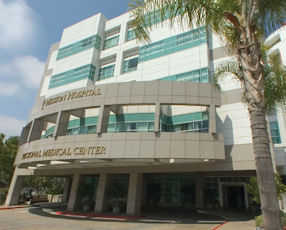
Mission Hospital’s Laguna Beach campus was one of four hospitals studied because it was an example of a nonprofit hospital that was recently bought by another.
Orange-based St. Joseph Health, which operates three other hospitals in the county, bought South Coast Medical Center for $36 million and converted it into Mission Laguna in 2009.
Mission Chief Financial Officer Eileen Haubl told the Business Journal last year that her facility was “comfortable” with the state audit, which was requested by state Senate Majority Leader Ellen Corbett, a Democrat from San Leandro.
“We have a philosophy of being transparent,” Haubl said.
Medtronic Gets European OK
Minneapolis-based Medtronic Inc., which has some 700 workers in Orange County, has received European regulatory approval for its Engager transcatheter aortic heart valve.
Medtronic competes with Irvine-based Edwards Lifesciences Corp. in the transcatheter replacement heart valve market. It got deeper into the market with its $700 million buy of Irvine-based CoreValve Inc. back in 2009.
Engager, which is made locally, is delivered to a patient’s heart using a transapical delivery catheter, which is inserted via a small incision through the ribs.
Medtronic said the valve is designed to treat patients with severe aortic stenosis who are at high or extreme risk for surgical valve replacement.
The device maker said that clinical trial results showed that Engager had 94.3% “overall device success” and that there were no procedures that required a second valve and no occurrences of valve embolization, coronary obstruction or device malposition.
Bits and Pieces
UCI Medical Center in Orange is now linked to the Orange County Partnership Regional Health Information Organization Inc., which also is based in Orange and connects providers’ electronic health records with users in a bid to improve care. … Irvine-based Quality Systems Inc.’s NextGen Healthcare Information Systems LLC subsidiary said that its NextGen Ambulatory electronic healthcare record version 5.8 received a 2014 certification as a complete electronic health record by the Certification Commission for Health Information Technology.
