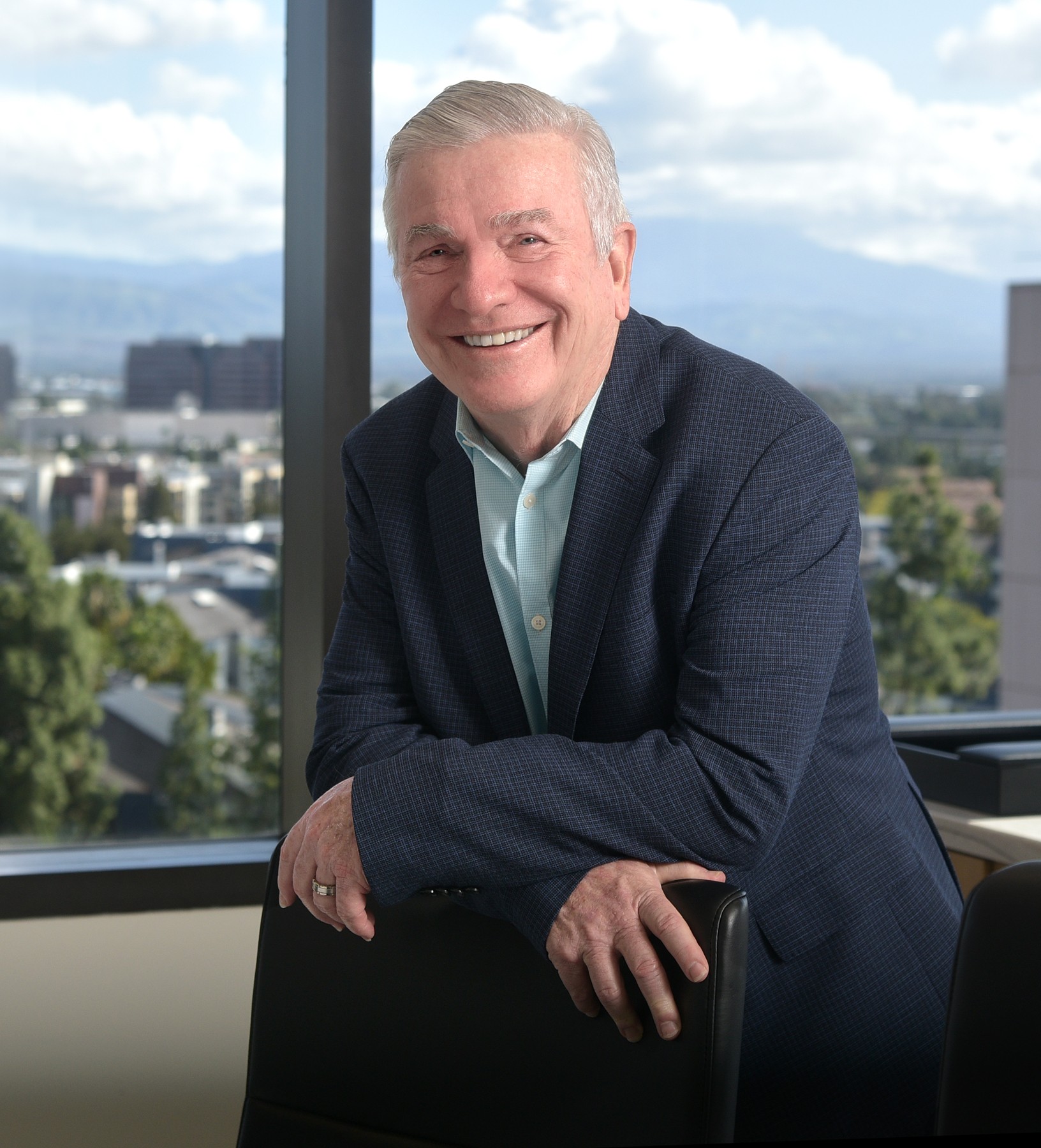

Banc of California Inc., the second largest bank based in Orange County, decided 22 months was enough for Doug Bowers as chief executive.
Beginning March 18, Jared Wolff takes over that same role for the Santa Ana-based bank (NYSE: BANC).
The move took local bankers and Wall Street by surprise. Shares of the bank, which has about $10 billion in assets, dropped 13% to $15.06 in the two trading sessions after the announcement was made earlier this month.
At press time, shares hovered around $14.86 and a $743 million market cap.
“In our opinion, Banc’s stock traded lower on the news on the possible perception the company was not yet prepared to sell” itself, FIG Partners analyst Timothy Coffey wrote in a note to investors.
“We believe Bowers was viewed as a steady hand who could lead the company through a merger.”
Bowers’ departure marks the second change of a major OC bank chief executive in four months.
Stephen Gordon resigned in late November from Opus Bank, the third largest based in OC. A full-time replacement at Irvine-based Opus—which, like Banc of California, has been cited by analysts as a potential acquisition candidate—has yet to be announced.
Bowers took the position in May 2017, after a successful career at Square 1 Financial, which he sold for $815 million to Los Angeles-based PacWest Bancorp in 2015. Ironically, Wolff worked for 12 years at PacWest, leaving in 2014.
Mess Fixing
Bowers, 60 years old according to the bank’s latest proxy statement, has more than 35 years of banking experience, including almost 30 at Bank of America where he led various divisions. He also worked at Lone Star/Hudson Advisors, a private equity firm.
Bowers was an outsider from the East Coast who arrived at a bank in turmoil.
Predecessor Steve Sugarman formed the company by combining two banks, and then went on an acquisition spree that in five years quadrupled Banc of California’s assets to $11 billion, becoming the biggest bank based in Orange County.
The bank became known on Wall Street as a “serial issuer” of stock and debt to fund its acquisition spree. It spent extraordinary amounts on marketing, by banking standards.
Most notably, it paid $100 million for the long-term naming rights to a soccer stadium in downtown L.A. that cost $350 million to build. It opened last April.
The bank also became known as a place where Sugarman’s friends and relatives obtained questionable loans. Sugarman in 2016 held an annual meeting where he was the only director out of seven who bothered to appear.
Sugarman resigned in January 2017 on the same day the bank announced the Securities and Exchange Commission would investigate how the bank responded to comments by a blogger. The SEC hasn’t released its findings yet.
The bank went through a proxy battle that ended in early 2017 with a shakeup of the board of directors. It dumped its residential mortgage unit, cutting its workforce in half to about 900 at that time.
After Bowers arrived, he criticized the previous management for using “high-cost funding to invest in relatively low-yielding securities.”
Bowers encountered a workforce that leaned more toward the consumer-oriented savings and loan industry than the commercial banking side, said Gary Findley, who publishes an Anaheim-based newsletter for senior management and directors in the banking industry.
“They’ve been trying to turn a zebra into a horse,” Findley said.
Bowers replaced many executives and dealt with other institutional issues during his tenure, including an instance of the bank a year ago losing $13.7 million through a falsely documented line of credit.
An explanation for the theft has yet to be publically disclosed.
A year ago, Bowers laid out the bank’s long-term plans, saying the turnaround would take a while. He increased the bank’s exposure to commercial loans while reducing riskier investments, such as alternative energy partnerships.
Investors weren’t impressed, sending the shares 1.6% lower on the day of the Feb. 8, 2018 announcement. The layoffs continued and the bank ended last year with 730 employees.
In July, it lost the title of the biggest locally based bank to rival Irvine-based Pacific Premier Bancorp Inc. (Nasdaq: PPBI), whose assets increased to $11.5 billion thanks to acquisitions.
Bowers’ key problem was trying to keep deposit costs low at a time when the Federal Reserve was raising the benchmark interest rate. He had promised investors that net interest margin, a key banking metric to measure profitability, would range from 3% to 3.2%.
In the latest quarterly report, the net interest margin fell to 2.88% from 2.93% in the third quarter because of increasing competition for deposits.
The bank reported fourth-quarter adjusted profit of 5 cents a share, missing the Zacks consensus estimate of 23 cents.
FIG Partners’ most recent report includes an unflattering chart that showed Banc of California topped 10 rivals in only two out of 50 possible direct comparisons.
“We believe the turnaround at Banc is well underway, but it could take more time to improve fundamentals that affect profitability and valuation,” Coffey wrote. “Until then, we do not believe Banc is likely to achieve a market-comparable premium on a potential exit.”
If the bank improves key metrics like net interest margins, loan yields and deposit costs, its value could reach $26 a share, Coffey said. That’s about 90% higher than where the bank’s stock currently trades.
From the day Bowers started to his announced departure, the bank’s stock declined about 18% while the benchmark KBW Nasdaq Regional Banking was flat in the same period.
Bowers and Wolff declined to comment to the Business Journal, according to a spokesperson.
The New Guy
Wolff, who has a law degree from the University of Michigan, was previously the general counsel at City National Bank, where he managed the Beverly Hills-based firm’s legal and corporate administrative group. From 2015 to 2017, he was a co-managing partner of Quarter Group LLC, a real estate investment company focused on acquiring urban property.
The 49-year-old has a deep background in banking acquisitions and operations, having served in multiple roles at PacWest Bancorp (Nasdaq: PACW) from 2002 through 2014, including as president of its subsidiary Pacific Western Bank.
During his time, Wolff led more than 20 acquisitions, including PacWest’s $2.3 billion purchase of CapitalSource in 2013.
“He comes from a good pedigree,” Findley said. “He’s been at very good banking institutions. That pedigree will transition well at this new bank.”
Wolff, who will also join the board of directors, signed a three-year contract where he will receive initial annual base salary of $750,000, bonuses up to 150% of his salary, and equity awards amounting to $3 million.
“I don’t look at the guy leaving as a failure,” Findley said. “I never looked at him as the CEO for a long period of time.
“I think they’re running at about 80% capacity. They’ve done some good things. Let’s see if they become a vibrant regional bank. They’ve got the capacity to do it. The new guy is competent.”