

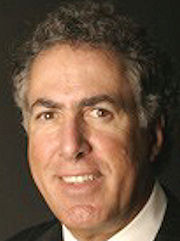
Corinthian Colleges Inc. has graduated to stability after a rough patch of several years, according to Chief Executive Jack Massimino.
“We’re hitting bottom and coming up on the other side,” Massimino said. “I would say we’re stabilizing ourselves. Operationally we’re in a good place. We did a lot last year, improving our balance sheet and cash flow.”
The most recent indicator of progress came last month, when the Santa Ana-based operator of for-profit colleges signed a new lease for 164,000 square feet of headquarters space at Griffin Towers in the South Coast Metro area, where 800 of its 15,000 employees work.
The new lease ended speculation about a possible move and came with a lower rent, a tenant-improvement allowance and expansion options, according to Massimino.
Headquarters isn’t the only place Corinthian has been trimming. It’s cut $150 million in expenses over the last year-and-a-half, primarily through sales of campuses and layoffs.
“We’ve closed or consolidated about 10 schools,” Massimino said. “We also slowed down opening new ones. We’ve opened eight in the last three years. We’re opening one this year. Everything slowed down a little bit.”
The company now runs nearly 120 colleges under the Everest, Heald and WyoTech brands. Campuses are located throughout 26 states and in Canada, with about 91,000 students.
Revenue
Corinthian wrapped up its fiscal 2012 in June with annual net revenue of $1.61 billion, down 10% from a year earlier. Its quarterly revenue was $395 million, down 3% from a year ago.
Those numbers aren’t a surprise, given the increased scrutiny that Corinthian and other for-profit educators have seen from federal regulators over student graduation rates, job placement prospects, and the ability of graduates to pay back student loans.
That brought new regulations that have toughened standards for student loans and grants, which in turn have dampened enrollment at Corinthian schools and peers.
DeVry Inc. last month reported its profits fell 89% during its fiscal fourth quarter, partly attributed to a 15% drop in enrollments. The Downers Grove, Ill.-based educator has roughly $1.39 billion in market value, after its stock price dropped more than 43% over the year.
Phoenix-based Apollo Group Inc. saw a 37% decrease in earnings in the latest quarter ended in May. Enrollment of students seeking degrees at its flagship University of Phoenix fell 13%.
Apollo Group’s shares have fallen about 46% over the year, leaving the company with about $3.26 billion in market value.
Also cutting into enrollment for the for-profit college operators is the improvement in economy from recession to the current, slow expansion.
• Headquarters: Santa Ana
• Business: For-profit college operator
• Founded: 1995
• Ticker symbol: COCO (Nasdaq)
• Fiscal 2011 revenue: $1.61 billion
• Recent earnings: ($6.5 million) for June quarter
• Market value: About $203 million
• Notable: Operates close to 120 campuses in the U.S. and Canada
“Counter-Cyclical”
“Part of the trend [of decreasing enrollment] is that we’re counter-cyclical,” Corinthian’s spokesperson Kent Jenkins said. “We had a huge enrollment surge during the recession, when jobs were especially hard to come by and people were looking to build additional skills. Now, as the economy stabilizes, enrollment has returned to more typical levels.”
Corinthian’s moves to cut costs have the company focused on stability rather than any big plans for growth in the near term.
Chief Financial Officer Bob Owen said in a recent call with analysts that new enrollment for the September quarter is expected to be “essentially flat.”
The company expects quarterly revenue to range from $395 million to $405 million, compared with the year-ago figure of $414 million. Owen forecasts earnings of between $2.6 million and $4.4 million for the quarter. The company lost $9.6 million in the same quarter a year earlier.
Corinthian’s stock price has been out of favor with investors for the past several years, and now hovers around the $2 level, with a market value of about $202.6 million. It had traded above $21 three years ago, and its highest point was in the $35 range in 2004, when it had a market value of about $1.6 billion.
Prices began to slide in mid-2010, amid legal investigations and shuffles in leadership.
That’s when Massimino retook the chief executive title. He had served in that post from 2004 to 2009, when he became chairman of the board of directors.
He came back as chief executive in late 2010, after Peter Waller resigned.
“Progress”
“The organization was in significant financial trouble,” Massimino said. “We’ve made a lot of progress. Our stock price is impacted by a whole number of things, not the least the regulatory issues. Hopefully we’ll see some movement. The company’s got to perform. These are tough times, but we’re not the only industry that’s got a lot of regulation over us.”
The “biggest thing” that hit Corinthian was the “gainful employment” regulations outlined by the Department of Education, Massimino said.
“There were some regulations that were developed around compensation and misrepresentation, which affected everybody, all schools,” he said. “And then there was a move by the department that was fundamentally focused on for-profits.”
Gainful employment regulations would have zeroed in on for-profits in an attempt to identify schools with large numbers of graduates who are unable to repay their loans. That could limit a school’s eligibility for federal funds to offer as financial aid.
On Hold
The measure is on hold for now, after a federal district court ruled against it in June, but the Education Department could appeal.
The default rate for student-loan payments by Corinthian’s graduates is relatively low, according to the company, at 6.7% for students who graduated as recently as 2010. The latest data available from the Education Department show a national average default rate of 8.8% for 2009. Public institutions had a default rate of 7.2% for the period, and for-profit schools had a 15% rate.
Corinthian’s job placement rate has been steady around 67% over the past few years.
Its schools last year graduated 49,000 students out of about 90,000. About 33,000 of the graduates landed jobs in fields relevant to their areas of study, the company said.
Corinthian graduated 48,930 students the year prior, of whom 33,316 obtained jobs, according to Jenkins.
“Prior to the 2008 recession, our placement rate was in the mid-70 percent range,” Jenkins said. “We responded to that by adding several hundred new staffers to our career-services division. We now have more than 700 people whose only job is helping our graduates get jobs.”
