

The recent headlines about our trade deficit widening to 18.2% in September in correlation to rising foreign oil prices is a direct result of California and the rest of the U.S. choosing to send our money offshore for energy needs rather than developing proven reserves here.
Major strides are taking place with alternative energies, but the major hurdle for alternatives is the cost of competing with the price of oil. A Sept. 24 article in the Wall Street Journal by Keith Johnson describes the break-even numbers:
Geothermal breaks even when crude oil is at $57 a barrel.
Nuclear power breaks even when crude oil is at $69 a barrel.
Onshore wind power breaks even when crude oil is at $92 a barrel.
Offshore wind power breaks even when crude oil is at $189 a barrel.
Solar thermal breaks even when crude oil is at $393 a barrel.
Natural gas breaks even when crude oil is at $657 a barrel.
Early last week, crude oil was around $80 a barrel.
The break-even number is partly why alternative fuels cannot come on line fast enough or at the scale required to replace current energy sources for several decades. The optimistic outlook in 2030 is that our energy sources will still be about 80% dependent on crude oil, coal and natural gas.
The dependency the U.S. has on crude oil from foreign countries, most of whom don’t like the U.S., is our choice. And it’s costing us about $600 billion a year to import and burn their oil to meet our thirst for energy.
The U.S. currently is using 21 million barrels of oil a day and producing 5.5 million barrels.
Again, it’s our choice to import the difference. If oil prices go up as projected, the annual financial burden on us will be more catastrophic than it currently is.
We can continue to send $600 billion offshore every year.
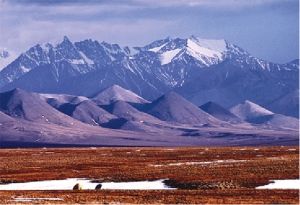
Or, we can choose to develop proven U.S. coastal reserves, as well as reserves in the Arctic National Wildlife Refuge, and keep those billions of dollars and jobs here, while we further prepare for the transition to alternatives. Everyone seems concerned about the carbon footprint of the world, yet our choice continues to let the other foreign countries develop their resources, with less stringent environmental controls than those in California and the U.S., and control the world’s carbon footprint.
Those foreign sources are subsidizing the gasoline and diesel fuels that their citizens use, with our money!
I personally had the opportunity to visit with several of our Sacramento legislators in 2008 and 2009 and found them politically sensitive to energy issues but lost on energy’s financial impact on America—and the impact that foreign countries with less stringent environmental regulations are having on the world’s carbon footprint.
This is a reflection of our choice not to develop our own resources and keep the money, better environmental controls and the jobs here.
Successful businesses are the foundation of our tax base in California. Employed people buy cars and homes and further support the tax base in California.
Unfortunately, California is making great strides toward growing its image of being the least business friendly state in the union.
In California, with its extraordinary roadblocks from processes, procedures, regulatory requirements and special interest groups, it’s tough to convince private industry to invest capital in a state that virtually guarantees the lowest return on its invested capital.
Our representatives in Sacramento continue to choose to remain content with the status quo—not to attract investments into California, not to develop proven reserves, and not to run the state like a business as its expenses are growing.
California’s Global Warming initiative, AB 32, which requires that the California Air Resources Board ensure that greenhouse gas emissions are reduced by 25% in California by 2020, which Gov. Schwarzenegger signed into law in 2006, will not solve a global problem.
Instead, it will further perpetuate our choice to not develop our own resources.
Our choice continues to let the foreign countries develop their resources with our money, for our use and let them—with less stringent environmental controls than those in California and the U.S.—control the carbon footprint of the world.
The choice is ours:
We can continue to send billions of dollars offshore annually and incur further costs of an AB 32 implementation, while foreign countries with less stringent environmental regulations control the impact on the world’s carbon footprint.
Or, we can develop proven U.S. reserves and eliminate dependence on supplies from countries that don’t like the U.S. and have less strict environmental controls.
Stein is vice president of business development for Irvine-based Principal Technical Services Inc., a staffing company that focuses on the petrochemical, power, transportation and information technology industries.
