

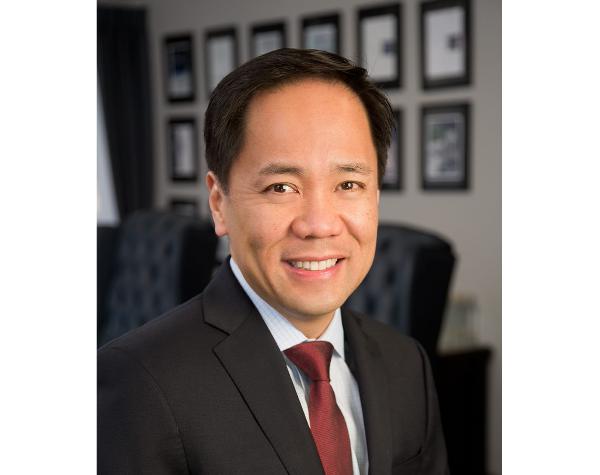
IVO TJAN
Chairman/President/CEO
CommerceWest Bank
The Orange County economy seems to continue with positive trends across most industries. The recovery here from the pandemic for the consumers has been strong. We believe that as more venues, restaurants and other services fully reopen, it will continue to add to positive growth in Orange County for the remainder of the year.
I don’t believe near-term interest rate increases will have a major effect on commercial local lending, but we do see it having a slightly negative trend on consumer and mortgage lending.
My belief is that with the current two-year Treasury in the 1.45% range and 10-year Treasury in the 1.90% range, it really doesn’t give the Feds today a lot of room to materially increase short-term rates. If you did, there could be a possible inversion in the yield curve, which would not be a good signal to the market. That means today that long-term rates will go up, but not skyrocket like some project in 2022.
We continue to see strong demand this year for lending to operating companies and expect lower demand for commercial real estate loans if rates rise materially and cap rates remain at these low levels.
Inflation is causing many of our business clients to reassess their cost structure, automate and increase prices on products or services. Wage inflation continues to be a problem and finding labor is slowing down the growth or reopening for many businesses as well.
If inflation leads to lower profitability for businesses, then it will affect our business lending, but today we see businesses adjusting to the new reality and the consumers continue to be willing to pay for the increase product or service.
Overall, we expect stronger demand in business lending in 2022 compared to 2021.
ETHAN MORGAN
Managing Director/Market Manager
Orange County, J.P. Morgan
Orange County has been better positioned than most markets nationwide to weather the pandemic’s impact of the past two years. Even with the headwinds of inflation in 2022, there are many reasons to be optimistic.
Orange County has competitive advantages including an educated workforce and a diverse industry base that has helped fuel our recovery faster than our neighboring counties across Southern California. Over the last year, unemployment has dipped below 5%, with our tourism industry representing half of all new jobs created during this period.
On top of this, let’s not forget that household net worth is at all-time highs, debt service payments are at all-time lows, and consumer demand has room to grow, even in the face of rising inflation.
Many observers expect at minimum four 25 basis point rate hikes this year. Even at these rates, they are below the current level of inflation. So for now, it seems safe to expect the Fed will not take drastic steps that could break the economy in its fight against inflation.
Even with potential rate hikes this year, they are unlikely to reach levels that would dissuade corporate management teams, already flush with cash, from committing to capital expenditures that could for example expand capacity or increase automation. Orange County businesses are primed to spend this year.
We know the Fed plans to, or has at least signaled that it intends to, raise rates several times this year to tame inflation. But it remains unclear how aggressive the Fed will respond.
For example, the housing market already has been pricing in higher rates before the Fed has acted. But even so, there is little to suggest a slowdown in the housing market. This suggests very durable demand for housing that homebuilders cannot keep up with. This should support the housing market through the rest of the year, at least.
More broadly, as an investor, there is always something to be worried about. Last year, it was new variants of COVID-19. Today, it’s hot inflation, central bank policy tightening and geopolitical conflicts. But since the start of 2017, an investment in the S&P; 500 has more than doubled up to the present. That said, staying the course allows investors the ability to compound interest on their investments.
I would never argue to dismiss external risks, however recent history has shown that markets tend to right themselves as those risks pass. In the meantime, active management and portfolio construction can earn their keep by adjusting exposures to navigate the uncertainty.
MANISHI PARIKH
Orange County Commercial
Banking Executive, Wells Fargo
With more than 20 years of commercial banking experience, my advice to Orange County business leaders is straightforward: Keep both hands on the steering wheel and follow these four financial driving tips before making sudden corrections based on the recent rate news:
1. Don’t overreact
As of February, Wells Fargo anticipates that the Federal Reserve will raise interest rates several times in 2022. But it’s important to put the climbing interest rate environment into historical perspective. Today’s rates remain historically low and borrower friendly. Although rate hikes are anticipated over the next year, they are expected to be gradual and remain modest. It’s hard to remember, but the federal funds rate hit 20% in 1981!
2. Avoid kneejerk borrowing
It’s true. There is upward rate pressure. So, if you have specific borrowing needs, now’s the time to lock it in. However, interest rates should not be the driving factor when making borrowing decisions. If you don’t need the capital, don’t borrow just to take advantage of the low rates.
3. Remember: It’s not all or nothing
Depending on what makes sense for your business, you might consider acquiring some capital now to fund some projects at the current rate and planning to borrow more later to fund future needs. Don’t forget to consider holding a mix of floating and fixed rates. This allows you to hedge and still benefit from low floating rates, while also maintaining certainty for longer term, fixed rates.
4. Consider the big picture
The cost of capital should be only one of the factors considered when making borrowing decisions that impact your company’s financial future. Money remains pretty cheap.
Besides interest rates, other negotiated terms—loan maturity, advanced rates, and guarantees—can offer great value. Many times, it makes good strategic sense to forego finding the lowest interest rate to secure the best terms to boost your company’s medium- and long-term success.
The important thing to remember is: Don’t panic. Instead, consult your commercial banking relationship manager to learn more about your options. They should be able to provide valuable information on everything from simple fixed-rate loans to more complicated interest rate swaps.
Work with your banker to find solutions that match your company’s risk appetite. The goal: Ensure that your financial future is deliberate—not reactive, based on interest rates’ ebb and flow.
ASH PATEL
President/CEO
Commercial Bank of California
The local Orange County economy is growing. In fact, by all anecdotal appearances and available statistical data, it’s not only growing, it’s thriving.
We see this clearly in total OC employment, which is up 6% per annum as of November 2021. Moreover, a quick review of recent trends in the various O.C. real estate markets show continued strengthening in terms of absorption, rental rates and prices.
As we look towards the horizon, rising interest rates should have a slowing impact on the lending velocity in the area. However, the favorable overall economic circumstances could serve to maintain bank lending levels consistent with the calendar year 2021.
Business owners and real estate investors alike should expect measurably higher interests over the coming year. Although the magnitude and pace of the anticipated interest rate changes are quite uncertain, most market participants estimate a 0.5% to 1.0% increase in calendar year 2022.
Inflation is a very hot topic right now and it will certainly affect lending, predominately due to how inflation pressures cause a rise in nominal interest rates. All interest rates have the potential for rising by way of market dynamics—even in the absence of any measurable actions by the Federal Reserve. However, actions by the Federal Reserve most directly impact the most short-term interest rates (such as the targeted Federal Funds rate).
Allen Staff
President
Bank of America Orange County
Overall spending continues to be strong, which is good for local businesses and the economy, especially given that two-thirds of the economy is driven by consumer spending.
A high percentage of Orange County wealth revolves around residential real estate, which has had and continues to have strong upward momentum. We also see growing demand for loans in our middle market and small businesses, indicating ongoing activity, as well as growth in new business creation across the region.
On the topic of interest rates, in general, increasing rates are symbolic of a strong economy, which we are currently seeing. We see continued strength of consumer spending despite worries around inflation or interest rates, which is good for business. While rate increases can certainly act as a headwind for businesses, rates overall are still low and overall cost of capital is still notably below the returns that companies can recognize by making strategic investments in their companies to meet demand.
Before the pandemic, we had a strong economy and interest rates were higher.
While we expect this economic growth will slow, driven by the Federal Reserve normalizing interest rates, what we hear from our business clients is more around issues of labor shortages and labor costs. The main constraint on growth has been things like supply chain shortages.
To combat inflation, the Federal Reserve has indicated it is going to increase rates and that increase will affect variable interest rates on loans. We have already seen increases in mortgage rates as the marketplace considers inflation expectations and potential future interest rate adjustments by the Federal Reserve.
A normal upward curve does respond to periods of prosperity, so yes rates can continue to go up without Fed moves.
Carson Lappetito
President
Sunwest Bank
The Orange County economy is growing and recovering quickly from the pandemic. The policy decisions made by the county resulted in a more positive economic outcome for Orange County as compared to other counties in California. This is driving a strong resurgence of business activity across industries, as well as migration of business and individuals to Orange County from other parts of California.
However, we are also seeing continued outmigration from the state by local businesses, largely due to taxes, political policy and rising costs.
Rising interest rates will certainly impact our local economy.
The first area where it could manifest is in the residential property market. The Federal Reserve (FRB) has been purchasing a significant volume of mortgage securities and as the FRB reduces purchases and unwinds its balance sheet, mortgage rates could increase significantly.
Higher interest rates will impact residential housing values, sales volumes, and the industries that support housing. Rising interest rates can also result in higher cap rates for the commercial real estate market which can negatively impact values. Orange County is heavily dependent on the commercial real estate industry and declining commercial real estate values could cause stress in areas of our local economy.
Inflation is a real concern. At Sunwest, we have been talking to our clients about it for over a year. Inflation is a tricky economic characteristic because it can take on a life of its own if not addressed quickly.
There is a turning point with inflation; this point is when businesses and individuals change their mindset and start buying supplies or products earlier to avoid future price increases. This pulls demand forward and further exacerbates inflation. It feels as though that phenomenon is occurring right now, which means inflation will only get worse in the near-term.
This is very important as it relates to Federal Reserve interest rate policy. The FRB is in a difficult position because they need to increase interest rates to combat inflation, but not impact asset values too greatly. This is the equivalent of walking a tight rope.
As a result, the FRB may be slow in addressing inflation which could cause medium and long-term interest rates to increase more than expected. Conversely, the FRB may raise short-term interest rates quickly to address inflation, but that will ultimately slow growth of our local and national economies as well as the capital markets. With the current uncertainty in the economy and FRB policy, it is very important to be prudent and disciplined with your capital.
