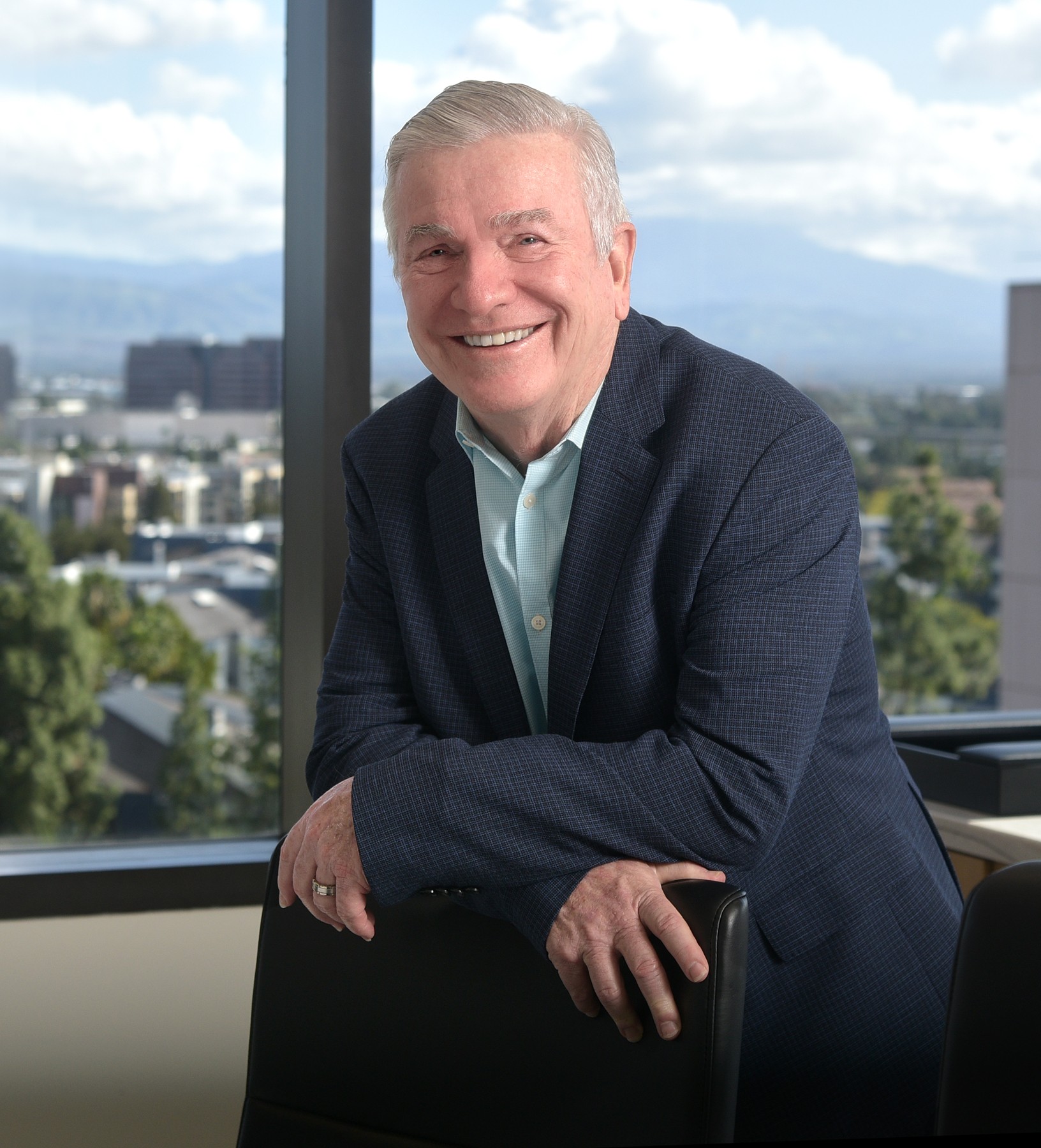
Brad Reese, during a recent tour of his Cirtech Inc. factory in Orange, pointed out an unusually shaped semiconductor board.
“It goes into a Patriot missile. Notice the shape of the board so that it’s half round? Envision that in the nose cone of a missile.
“To this day, we’re building lots of Patriot missile circuit boards here in this factory.”
In many ways, Cirtech is the classic small business begun in the 1960s in Orange County to thrive on defense and aerospace work, then confront questions about its survival.
That’s why Reese sold it last year to Cartel Electronics of Placentia. Then this year, the combined entity was bought by APCT Holdings, a Santa Clara-based printed circuit board manufacturer with 340 employees at five North American factories and an estimated $75 million in sales.
“I thought it’d be a good blend between the two companies,” APCT Chief Executive Steve Robinson said in a phone interview. “Anytime you make an acquisition, you’re looking at the team involved. I love their passion.”
Playing With Capacitors
Reese is certainly passionate about technology, calling himself “a real techie kind of person.” He wired his own home so that his cellphone can control the lights, video cameras, air conditioning and garage door.
“I learn new stuff every day,” he said. “I love tinkering with electronics. I’ll take apart anything. If you give me [an electronic] box, I’ll tear it down and play with the capacitors.”
Cirtech got off the ground in 1965 when Reese’s father, Frank, now 83 and living in Yorba Linda, was working as a lead printed circuit board designer at the former Anaheim-based American Aviation and realized there was a shortage of designers.
Brad Reese began sweeping floors while in high school, which he graduated from in 1978, skipping college to join the company full time. He eventually learned every part of the business, from designing circuit boards to sales as he climbed to vice president of operations.
Reese, who took over for his father 22 years ago, accepted a two-year contract to remain with APCT following the acquisition. During an interview, the 58 year old showed off business cards with his new general manager title instead of the old president role.
“It doesn’t bother me at all. I’m not a title person—I don’t care.”
Failure Not an Option
Cirtech’s niche is building military printed circuit boards, which provide about 80% of its business. Customers include Boeing Co., Lockheed Martin Corp. and Raytheon Co.
The circuit boards end up in Navy ship antenna systems, B-52 bombers, even nuclear bombs. Sometimes they go into secret projects he’s not permitted to know about.
In the 1990s, his company installed the boards for global positioning guidance in nuclear bombs. He flew to Montana, where he went underground to the launch chamber and actually touched a live nuclear bomb.
“I literally saw the guys sitting in the chamber ready to rock with the nuclear codes. I was blessed to see all that.
“We built every one of those GPS systems for all the nukes in the United States. Isn’t that neat?”
Cirtech’s boards aren’t the type that go into cellular phones. They must be sturdy enough to withstand massive pressure from missiles or in space, where circuit boards change shape and thickness and can crack.
“These are military products that go into devices that protect our country and our servicemen,” Reese said. “If our circuit boards fail, there are huge stakes at risk.”
Lost Decade
The semiconductor manufacturing industry has gone through a tumultuous decade, falling from 1,500 manufacturers producing $15 billion worth of products in 2008 to about 250 with $2.5 billion in annual sales, Robinson said.
Reese attributed the decline to Chinese manufacturers taking American business, particularly for cellphones.
“They devastated our industry.”
While the Chinese were prohibited from competing with Cirtech for U.S. military business, other American manufacturers decided to enter the defense space, and the company’s revenue and margins contracted, Reese said. His annual sales declined from as much as $12.5 million with 139 employees in the 1990s to as low as $4.5 million last year.
“The piece of the pie has been getting smaller. I normally wouldn’t be proud of $4.5 million, but recent years have been challenging.”
OC Future
Another problem for manufacturers is an aging workforce, as younger adults are more interested in software companies like Google or Snap Inc. In fact, Reese decided to sell his company because his children declined to carry on the family business.
Despite the turmoil, OC still has many small manufacturers and opportunities, Reese said.
“They all build circuit boards, but there are different industries, different types of boards. You can build a board in many ways.”
He’s seeing “a trend of more work from China coming back here” to do quick turnarounds due to shorter shipping distances.
Reese said Cirtech is benefitting from the parent company’s large sales force bringing in new business. Cirtech plans to almost double its workforce to 80 by year-end.
“It’s really busy,” Reese said. “We’re growing a second shift and adding a third shift.”
As Reese said goodbye in Cirtech’s lobby, he discussed the pictures of U.S. Navy ships and B-52 bombers on its walls.
“I love stuff like that. It makes me proud.”