

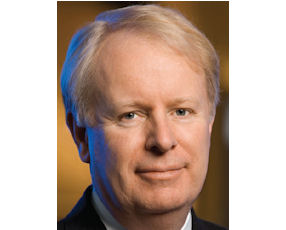
Allergan Inc. is setting an ambitious goal for research and development spending as it continues to load its pipeline.
Chief Executive David Pyott told attendees at the JPMorgan Chase healthcare conference this month in San Francisco that the maker of Botox and various other drugs is planning to hike its annual R&D spending to $1.5 billion over the next five years.
Allergan spent $772.9 million on research and development through the first nine months of last year, or about 17% of its $4.6 billion in revenue during the period. It won’t have a final R&D spending tally for 2013 or reveal its 2014 R&D forecast until it releases fourth-quarter and 2013 results on Feb. 5, but it previously estimated it would spend 16.5% of its total revenue on those efforts.
The company spent $989.6 million on R&D in 2012, or 17% of sales.
The drug maker will also add “hundreds more investigators” to its research and development workforce, Pyott said at the conference.
Allergan has some 2,500 research staff members companywide. It does the bulk of its R&D work at its Dupont Drive campus and some at its Bridgewater, N.J., outpost.
Company executives have dropped hints in recent months about some of the pending research and development activities.
For instance, Allergan is looking at “a couple of new entries for us in dry eye,” said Dr. Scott Whitcup, the drug maker’s executive vice president, research and development, and chief scientific officer, last year on an earnings call.
Those entries include Restasis [X], a variant of Allergan’s popular dry-eye prescription drug Restasis that Whitcup has said should be in development this year.
“We’ve always expected down the line [that] Restasis wouldn’t remain the only prescription dry-eye product,” Whitcup said.
Restasis [X] follows Allergan’s historical pattern of protecting its traditional drug franchises through what analysts have characterized as next-generation product offerings, something it’s done with glaucoma drugs Alphagan and Lumigan.
Allergan could also be looking for new deals.
Pyott said during the conference that it could spend up to $10 billion on potential acquisitions this year.
Allergan kicked off 2013 with a large deal, the $958 million purchase of Mountain View-based Map Pharmaceuticals Inc., bringing it the Levadex inhaled migraine drug, which awaits Food and Drug Administration approval.
One area the company won’t be looking in, however, is Ireland (see Health column, page 56).
Allergan’s boosting of research and development comes as it could face more generic competition in the next few years for some of its core drugs.
Actavis
The drug maker disclosed last week in a Securities and Exchange Commission filing that Actavis PLC, a Parsippany, N.J.-based generic drug maker previously known as Watson Pharmaceuticals Inc., filed a new drug application with the FDA seeking approval of a generic version of Restasis.
Restasis accounted for $662.4 million in sales for Allergan during the first nine months of 2013.
The drug maker previously forecast full-year Restasis sales of $850 million to $890 million, about 15% of its projected total sales of around $6 billion.
Allergan mentioned that the U.S. Patent and Trademark Office issued a method-of-use patent covering Restasis that’s scheduled to expire in August 2024. Allergan added that it submitted the new Restasis patent for listing in the agency’s Orange Book.
Lawsuit?
Analyst Seamus Fernandez of Boston-based investment bank Leerink Swann LLC predicted in a Jan. 22 client note that Allergan would sue Actavis and get a 30-month stay on any generic version of Restasis or that a patent lawsuit would occur in January 2016 “or slightly beyond that timeframe.”
Allergan declined comment on the lawsuit speculation.
Watson, which was once located just over the county line in Corona, took on the Actavis name when it acquired Switzerland-based Actavis Group in late 2012. The company’s founder, Allen Chao, lives in Anaheim Hills and is a well-known area philanthropist—the Chao Family Comprehensive Cancer Center at University of California, Irvine, bears his family’s name.
Separately, Allergan said last week in an SEC filing that it appointed former Genzyme Corp. Chief Executive Henri Termeer to its board of directors, bringing its total number of directors to 10.
