

Hedge fund billionaire George Soros is set to take ownership of Newport Beach-based chipmaker Conexant Systems Inc. after its bankruptcy reorganization.
The company last week said it reached an agreement on a prepackaged restructuring plan with owners and its sole secured lender, QP SFM Capital Holdings Ltd.
QP SFM is a unit of Soros Fund Management LLC, a New York-based hedge fund owned by Soros.
The package calls for QP SFM to convert $195 million of secured debt into equity and become the majority owner. QP SFM also will receive $76 million in unsecured notes as part of the transaction, and provide $15 million in debt financing for working capital in the re-emerged company, according to court documents.
Conexant, which filed for Chapter 11 protection last week in United States Bankruptcy Court for the District of Delaware, expects the proceedings to wrap up within 85 days.
Conexant’s management and San Francisco-based parent Golden Gate Private Equity Inc. have approved the transaction.
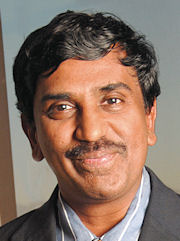
“This establishes a clear path to provide a clean balance sheet and will position us as a stronger company,” said Conexant Chief Executive Sailesh Chittipeddi.
The restructuring will eliminate debt carried over from Conexant’s days as a public company, as well as cut $19.7 million in interest payments and about $7 million in real estate costs annually. The company expects another $4.2 million in annual savings through job cuts and other cost-cutting measures.
“We’ve been reviewing all of our restructuring options for quite some time, specifically related to our real estate obligations and debt levels,” Chittipeddi said.
The overhang has strangled cash flow and put a damper on growth in the company’s emerging audio and video segments, which accounted for about half of its $135 million in revenue last year.
Conexant designs, develops and sells “chip sets,” or chips and related software imbedded in smart TVs, PCs, fax machines, set top boxes, and video surveillance equipment, among other products.
It has struck recent deals with some of the largest players in the TV and computer markets, including Samsung Electronics Co., LG Electronics Co., Dell Inc. and Lenovo Group Ltd.
It’s known as a fabless chipmaker since it doesn’t operate factories and instead relies on manufacturers typically in Asia.
The company employs about 180 in OC and San Diego, and about 400 companywide.
Conexant filed for bankruptcy in the face of debt and lease obligations on every office it operates around the world, many of which date back 10 years or more.
It recently defaulted on its lease that ran through 2017 on a 300,000-square-foot building in San Diego.
The lease was assumed in 1996 by Rockwell Semiconductor in a deal for Brooktree Corp. It was later taken over by Conexant, which spun off from what’s now Rockwell Automation Inc. in 1999.
Conexant recently moved out of the San Diego property, where it occupied about 30,000 square feet, into a nearby location.
Conexant also is trying to rework its lease on its 10-story headquarters at 4000 MacArthur, where it has its name on top of the building.
If terms aren’t reached, “we have to move,” Chittipeddi said.
Ups and Downs
Conexant has seen plenty of ups and downs as a private and public company.
It began operations in 1999 with nearly 6,300 employees and annual sales of $1.2 billion. It went on an early buying spree, acquiring seven companies from August 1999 to July 2000, using nearly $2 billion worth of stock for the deals.
Its annual sales hit a record $2.1 billion in 2000.
Conexant was the largest chipmaker based in Orange County at the time, but it began to slip when the tech bubble burst. It steadily lost ground to competitors such as Irvine-based Broadcom Corp. and others.
Its shares reached an all-time high of $132.50 per share in 2000, for a market value of more than $24.3 billion. They plummeted to $9.06 by the end of 2002, and revenue fell by nearly 75% over the same period.
That prompted the company to divest assets. Conexant spun off four businesses—including Mindspeed Technologies Inc. in Newport Beach.
Golden Gate took Conexant private in 2011 in a $282 million buyout.
By then its financial problems were becoming a growing concern for customers.
Last year Conexant lost its fax-machine chip business from Hewlett Packard, which accounted for nearly 10% of the company’s $166 million in sales in 2011.
That came on the heels of its largest printer customer, Eastman Kodak, filing for bankruptcy.
Conexant said balance sheet concerns contributed to losing a number of customers between 2010 and 2012, costing the company more than $80 million, according to court documents that portray the reorganization plan as a viable path to solid ground.
“Customers have expressed concerns about our financial viability, and this step allows us to address those issues on a long-term basis,” Chittipeddi said. “Feedback has been pretty positive. We believe this gives customers a much higher level of confidence in our staying power as a company.”
