

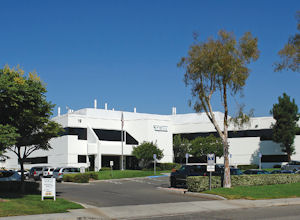
Generic-drug maker Teva Pharmaceuticals Inc. is cutting 65 jobs at its Irvine plant, according to a state filing.
The cuts will take effect Oct. 29 and include a number of positions, including scientists, chemists and inspectors.
Teva cut the jobs because it is “right-sizing” its Irvine operations, spokesperson Denise Bradley said.
Teva has about $18 billion in annual revenue. The drug maker is based in Israel with U.S. headquarters near Philadelphia.
It had an estimated 500 workers in Irvine before the filing, according to the Business Journal’s annual list of drug makers in September. The company employs more than 46,000 people worldwide.
Teva got its Irvine plant in 2003 after it bought generic drug maker Sicor Inc. for $3.4 billion.
Teva has had a history of layoffs at its Irvine plant in recent years. It cut 200 workers in late 2010 and 70 workers several months before that as it addressed quality-control concerns at the facility.
2011 Cuts
Teva cut 156 workers in Irvine last year after it stopped making propofol, a sedative that gained notoriety in the death of Michael Jackson, though Bradley said those job cuts weren’t tied solely to the propofol issue.
Teva’s version of propofol wasn’t involved in the Jackson case, but the company said it stopped making the drug because it was difficult to produce and not particularly profitable.
Other issues with propofol included a 2009 production stoppage and recall after high levels of toxins were found in vials of the drug made at the Irvine plant.
The Food and Drug Administration warned the Irvine site in 2009 in a letter that detailed “significant” manufacturing violations.
Teva has said fixing those problems took longer than expected, and it ceased all production at its Irvine location for almost a year from mid-2010 into 2011.
Resumption
It resumed production of other drugs at its Irvine plant in April 2011 and called the return to production “a significant step for improving its product availability for the U.S. injectable market.”
Teva subsequently said the problems cost the company $170 million in operating profit and $230 million in sales in 2010.
Analysts expect the company, which is expected to report third-quarter results on Nov. 1, to post a profit of $1.1 billion on sales of $5.1 billion.
The company was recently in the news after the FDA determined that a generic version of antidepressant Wellbutrin XL made by Hayward-based Impax Laboratories Inc. and marketed by Teva was not therapeutically equivalent to the name-brand version made by Britain-based GlaxoSmithKline PLC and marketed by Valeant Pharmaceuticals International Inc., a Canadian drug maker.
The FDA said that budeprion XL 300 milligrams would be taken off the market and said that it would ask the four other generic makers of the drug to conduct bioequivalence studies on their generic 300 mg extended-release bupropion products, according to industry website AdverseEvents.com.
Irvine-based Anchen Pharmaceuticals Inc.—which was bought for $410 million by Par Pharmaceuticals Cos. of Woodcliff Lake, N.J., last year—is one of the makers of generic Wellbutrin XL 300 mg that regulators want to do bioequivalence studies.
