

Irvine-based Vision Solutions Inc. is fighting a false advertising and antitrust lawsuit by a rival looking to challenge its dominance in the market for disaster recovery software.
Vision Solutions is awaiting a hearing on its request to have the case dismissed. The company has been tangled up in the lawsuit by New Zealand software startup Maximum Availability Ltd. for more than a year.
Maximum Availability, also known as Maxava, is seeking to stop Vision Solutions from using contested ads and sales practices.
Both companies make software that backs up data and keeps servers running during maintenance or in the case of a disaster.
The so-called “high availability” software runs on iSeries servers by IBM Corp. and is used by large corporations.
Maximum alleges Vision’s marketing materials amount to an attempt to “unfairly lure customers away.”
“This action arises out of seriously false and misleading statements by Vision in various printed advertising and marketing materials which it distributes to its existing and prospective customers,” the company said in the suit.
The suit also names as defendants Sirius Computer Solutions Inc., a Texas reseller of Vision’s software, and two Vision employees.
Vision and Sirius both are owned by Chicago-based private equity firm Thoma Bravo LLC.
Maximum added to its original complaint in October, tacking on three claims of antitrust violations, trade libel and interference with prospective economic advantage.
The company appears to be positioning itself as a beleaguered challenger in a David-and-Goliath battle.
Maximum holds 5% of the market for recovery software for IBM’s server, according to the suit. Vision Solutions dominates with some 90%, it said.
“We believe Vision’s illegal actions have impacted Maxava’s wider adoption in the marketplace,” said Maximum’s lawyer, Micah Jacobs of MBV Law LLP in San Francisco.
“While Maxava initially found evidence of Vision’s false claims in Orange County, it is now is clear that its anti-competitive conduct was more widespread than we initially knew about,” Jacobs said.
Maximum alleges it was unable to reach a sales agreement with New York-based Progressive Technology Group, a reseller and installer of IBM iSeries software.
The lawsuit contends Vision threatened to sever ties with Progressive if it offered Maximum’s products.
The suit also claims that Vision has played the same hand with other resellers to protect its market share.
Maximum is seeking damages, legal fees and the names of customers who may have seen the disputed marketing materials.
The company won an early round in June when a judge in Los Angeles issued a temporary injunction that ordered Vision to stop distributing the disputed marketing materials.
Vision has said the suit “is without merit.”
Not “Damaged”
Vision’s lawyers, headed by Ken Wilton at Seyfarth Shaw LLP in Los Angeles, said in the company’s motion to dismiss that Maximum has been unable to prove it’s sustained any harm.
“After amending the complaint twice and adding three new parties, Maximum has still not alleged that it has lost a single customer or demonstrated that it has in any manner been damaged,” said Vision’s legal team.
The motion is set for a hearing this week.
If the judge turns down Vision’s dismissal bid, the case would move forward for a trial date set for July.
Vision’s private equity parent has been increasing its share of the market.
Earlier this year, Vision nearly doubled its size with the $242 million acquisition of Southborough, Mass.-based Double-Take Software Inc., a publicly traded maker of data management and disaster recovery software.
With the deal under its belt, Vision said it would approach an estimated $200 million in annual sales have some 400 workers in all.
Thoma Bravo acquired Salt Lake City’s iTera Inc., another competitor, in 2006 and folded the software maker into Vision.
The private equity firm bought Vision for $63 million in 2006. It remains the company’s biggest stakeholder and has helped finance the acquisitions that have made Vision a dominant player in its niche.
Vision got its start in Irvine in 1990.
It maintained operations here after being bought by South Africa’s Idion Technology Holdings Ltd. in 2000 for $63 million.
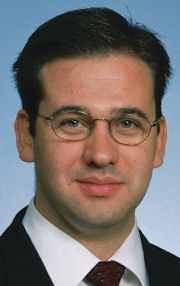
Chief Executive Nicolaas Vlok is a native of South Africa, where Vision still has a small office.
The buy caused tension between Vlok, then Idion’s chief executive, and his father, Marius Vlok, then an Idion director.
The elder Vlok questioned what Idion had paid for Vision and later left the company’s board. His son defended the purchase.
Prior Battle
The company was at the center of a takeover battle in 2002 between former South African parent Idion and Canada’s DataMirror Corp.
Toronto-based DataMirror attempted to buy Idion, and by default Vision Solutions, by upping its shares to force a takeover.
DataMirror once held as much as 43% of Idion.
After unsuccessful bids to gain control, DataMirror gave up trying to buy a majority stake and sold its shares in 2004.
IBM acquired DataMirror for about $160 million in 2007.
