

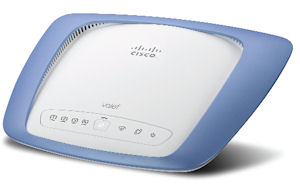
Cisco Systems Inc.’s Irvine unit has come out with a line of routers that uses the Cisco name for everyday consumers and taps the company’s Linksys brand for techies.
“We are looking at the market a bit differently now,” said Karen Sohl, spokeswoman for Cisco’s consumer unit in Irvine. “The consumer market is separated into two categories—the tech expert user and the mass market, everyday consumer.”
It’s been nearly seven years since Cisco scooped up Irvine-based Linksys, a homegrown maker of routers and other networking gear for consumers, in a $500 million acquisition.
Linksys’ campus near the University of California, Irvine, since has become the hub for Cisco’s consumer efforts, which are aimed at spurring sales of the company’s routers and the hit Flip video camera.
Cisco nabbed the Flip last year when it paid $590 million for San Francisco’s Pure Digital Technologies Inc., the maker of the pocket-size camcorder that uses flash memory.
In Irvine, Cisco designs and markets routers and other devices that let people link household computers and share Internet access. The local operation also handles marketing and administration for the Flip, which has engineering in San Francisco.
Last week, Cisco came out with three routers and adapters aimed at tech-savvy consumers who are into bells and whistles. They sell for $80 to $180 and fall under the Linksys name.
“Linksys is a powerful, market-leading brand that’s been traditionally very effective at talking to the tech-savvy consumer,” said Scott Kabat, director of marketing for Cisco and part of the original marketing team that launched the Flip camera.
The routers, sold under Cisco by the Linksys name, are marketed as “good, better and best,” or marketing speak for three levels of products that go up in price and complexity.
The highest-end router allows for running two separate wireless networks in one home.
“It’s targeted toward the user who will know how to configure a network and customize it on their own,” Sohl said.
Latest Release
Cisco is slimming down its consumer routers from 18 to five with the latest release—three under Linksys, two under just Cisco.
The line marks another step in the evolution—or absorption some might say—of Linksys within Cisco.
Using Linksys for techies shows Cisco’s commitment to the brand’s legacy. But the move also puts Linksys further into a niche as the brand gets entrenched in Cisco.
“From a strategy perspective, there were a lot of really cool technologies under the Cisco by Linksys brand that your mainstream consumer couldn’t easily use,” Kabat said. “It wasn’t designed with the mass market in mind.”
The Cisco brand routers still use Linksys’ technology. But they’ve taken a page out of the Flip’s playbook in a bid to sell to soccer moms and other everyday folks.
“It needs to be all about simplicity,” Sohl said. “Consumers don’t care about technology—they want the benefits of what it can do for them.”
The routers in Cis-co’s Valet line go for $100 and $150.
The first step in making the routers “was looking at what elements of the Flip experience we could apply,” Kabat said.
One thing routers have in common with camcorders—they are a pain to get up and running.
“A lot of our retailers expressed that they had a high return rate because customers were frustrated because they couldn’t get it set up,” Kabat said.
Hot Spots
The company is going as far as not calling its Cisco line of routers “routers.” They’re marketed as “hot spots,” a term everyday users are familiar with from wireless Internet connections at Starbucks and elsewhere.
The hot spot devices allow consumers to connect computers, video game consoles and smartphones.
They’re set up with what Cisco calls a “network key”—essentially a thumb drive loaded with Cisco’s software that helps set up a network in just about three clicks. It’s not too much of a stretch from the Flip’s plug-and-play setup.
“We have taken the simplicity of how Flip is used and we have tried to embed it into the setup of home networking,” Sohl said.
After initial setup, the software runs on the desktop of a computer at home to allow for wireless devices to be added and removed and for parents to put controls on what Web sites can be viewed by kids.
When Cisco bought Linksys, it got the lion’s share of the market for routers sold to consumers and small businesses.
It’s been looking to make Linksys products more consumer-friendly as more people get wireless Internet in their homes, according to Kabat.
“We want Linksys to be known for enabling that wireless technology for the core tech enthusiast and Valet for the mass market,” he said. “We can grow the whole category that way.”
